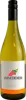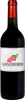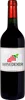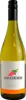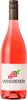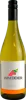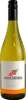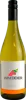
Maison Blanc SenthillePetit Pierre
 White wine
In the mouth this white wine is a .
This wine generally goes well with vegetarian, poultry or lean fish.
The Petit Pierre of the Maison Blanc Senthille is in the top 20 of wines of Duché-d'Uzès.
Taste structure of the Petit Pierre from the Maison Blanc Senthille
Light | Bold | |
Dry | Sweet | |
Soft | Acidic |
In the mouth the Petit Pierre of Maison Blanc Senthille in the region of Languedoc-Roussillon is a .
Food and wine pairings with Petit Pierre
Pairings that work perfectly with Petit Pierre



Original food and wine pairings with Petit Pierre


The Petit Pierre of Maison Blanc Senthille matches generally quite well with dishes of pasta, vegetarian or poultry such as recipes of pesto pasta salad, summer tuna quiche or nanie's diced ham quiche.
Details and technical informations about Maison Blanc Senthille's Petit Pierre.
Discover the grape variety: Nebbiolo
A very old grape variety grown in the Italian Piedmont. It has a great resemblance with the Freisa, which also comes from the same Italian region. Among the various massal selections made in Italy, we find lampia, michet and rosé. It can be found in Italy, Austria, Bulgaria, Cyprus, Greece, Mexico, the United States (California), Australia, etc. In France, it is practically unknown, perhaps because it is a delicate and demanding grape variety with, among other things, a fairly long phenological cycle.
Informations about the Maison Blanc Senthille
The Maison Blanc Senthille is one of of the world's greatest estates. It offers 5 wines for sale in the of Duché-d'Uzès to come and discover on site or to buy online.

The wine region of Duché-d'Uzès
The Duchy of Uzès refers to a territory whose history has marked that of wines since Greek times. This county town is also home to an AOC Duché d'Uzès appellation. After a Long battle until 2009, the country wine of the Duchy of Uzès obtained its title of IGP Duchy of Uzès. The Vinification of Grape varieties is done in compliance with the regulations of the AOC, which gives a uniform wine to the surrounding municipalities, around the chief town.
The wine region of Languedoc-Roussillon
Languedoc (formerly Coteaux du Languedoc) is a key appellation used in the Languedoc-Roussillon wine region of southern France. It covers Dry table wines of all three colors (red, white and rosé) from the entire region, but leaves Sweet and Sparkling wines to other more specialized appellations. About 75% of all Languedoc wines are red, with the remaining 25% split roughly down the middle between whites and rosés. The appellation covers most of the Languedoc region and almost a third of all the vineyards in France.
The word of the wine: Sulphur
An antiseptic and antioxidant substance known since antiquity, probably already used by the Romans. But it was only in modern times that its use was rediscovered. It will allow a better conservation of the wine and thus favour its export. Sulphur also gave the 18th century winegrower the possibility of extending the maceration period without fearing that the wine would turn sour and thus go from dark rosé wines to the red wines of today. Excessive sulphur, on the other hand, kills happiness, paralysing the aromas and causing headaches.