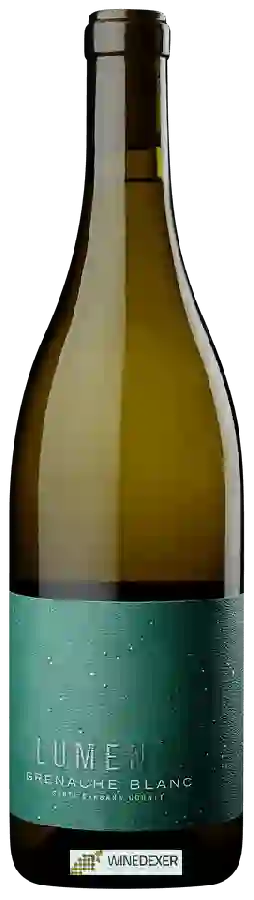
Winery LumenGrenache Blanc
 White wine


This wine generally goes well with poultry, rich fish (salmon, tuna etc) or shellfish.
Wine flavors and olphactive analysis



On the nose the Grenache Blanc of Winery Lumen in the region of California often reveals types of flavors of earth, oak or tree fruit and sometimes also flavors of citrus fruit.
Food and wine pairings with Grenache Blanc
Pairings that work perfectly with Grenache Blanc



Original food and wine pairings with Grenache Blanc
The Grenache Blanc of Winery Lumen matches generally quite well with dishes of rich fish (salmon, tuna etc), shellfish or poultry such as recipes of fish balls, sauerkraut of the sea in casserole or tunisian tagine.
Details and technical informations about Winery Lumen's Grenache Blanc.
Discover the grape variety: Rougeon
Interspecific crossing obtained by Albert Seibel between 70 Jaeger and 3015 Seibel. It can still be found in the eastern part of the United States, ... practically unknown in France.
Last vintages of this wine
The best vintages of Grenache Blanc from Winery Lumen are 2015, 0
Informations about the Winery Lumen
The Winery Lumen is one of of the world's greatest estates. It offers 10 wines for sale in the of Santa Barbara County to come and discover on site or to buy online.

The wine region of Santa Barbara County
The wine region of Santa Barbara County is located in the region of Central Coast of California of United States. We currently count 443 estates and châteaux in the of Santa Barbara County, producing 1259 different wines in conventional, organic and biodynamic agriculture. The wines of Santa Barbara County go well with generally quite well with dishes .
The wine region of California
California is the largest and most important wine region in the United States. It represents the southern two-thirds (850 miles or 1,370 kilometers) of the country's west coast. (Oregon and Washington make up the rest. ) The state also spans nearly 10 degrees of latitude.
The word of the wine: Table wine
A category of wine with no geographical indication on the label, often resulting from blends between wines from different vineyards in France or the EU. These wines are now called "wines without geographical indication" (and "French wines" if they come from the national territory).