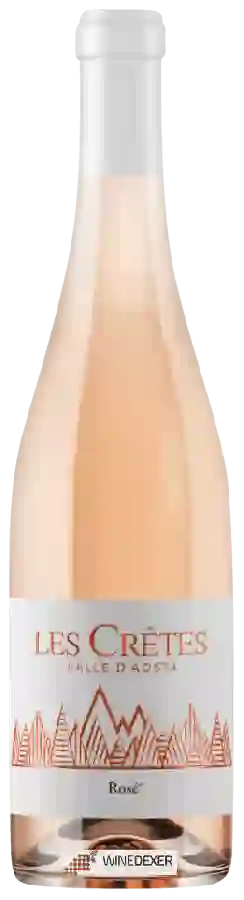
Winery Les CretesRosé
 Pink wine


This wine generally goes well with pork, poultry or veal.

Wine flavors and olphactive analysis

On the nose the Rosé of Winery Les Cretes in the region of Valle d'Aosta often reveals types of flavors of red fruit.
Food and wine pairings with Rosé
Pairings that work perfectly with Rosé



Original food and wine pairings with Rosé


The Rosé of Winery Les Cretes matches generally quite well with dishes of veal, pork or game (deer, venison) such as recipes of festive chinese fondue, pork roulades with cream and mushrooms or duck baeckeoffe with christmas spices and dried fruits.
Details and technical informations about Winery Les Cretes's Rosé.
Discover the grape variety: Pinot noir
Elegant reds, light in colour with silky tannins, showing strawberry, cherry and raspberry aromas, evolving to forest floor, mushroom and spice with age. Fresh acidity, delicate finish. Star of the Côte d'Or (Romanée-Conti, Chambertin, Volnay), pillar of Champagne (Blanc de Noirs) and signature of Oregon, Central Otago and Sonoma Coast. An early-ripening Burgundian variety, one of the world's greatest.
Last vintages of this wine
The best vintages of Rosé from Winery Les Cretes are 0, 2019
Informations about the Winery Les Cretes
The Winery Les Cretes is one of of the world's great estates. It offers 28 wines for sale in the of Valle d'Aosta to come and discover on site or to buy online.

The wine region of Valle d'Aosta
Italy's smallest vineyard (~500 ha) between Mont Blanc and Canavese, among Europe's highest vines (up to 1,200 m at Morgex). Native Petit Rouge signature: fine, fresh reds with signature notes of raspberry, violet, alpine herbs, sweet spices and a mineral touch, silky tannins. Local Cornalin, Fumin and Mayolet complete. Firm Nebbiolo (Picotendro), light Gamay.
The word of the wine: N-M
Negociant-manipulant. Company that buys grapes, sometimes in addition to its own vineyard, elaborates and markets its champagne. Most of the big brands like Moët or Taittinger are N-M.