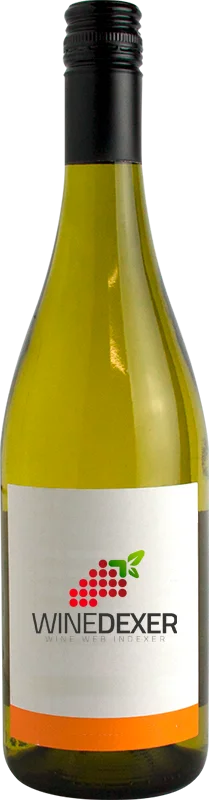
Winery Laurent BagnolMélina Blanc
 White wine



In the mouth this white wine is a with a nice freshness.
This wine generally goes well with vegetarian, poultry or lean fish.
Taste structure of the Mélina Blanc from the Winery Laurent Bagnol
Light | Bold | |
Dry | Sweet | |
Soft | Acidic |
In the mouth the Mélina Blanc of Winery Laurent Bagnol in the region of Pays d'Oc is a with a nice freshness.
Food and wine pairings with Mélina Blanc
Pairings that work perfectly with Mélina Blanc



Original food and wine pairings with Mélina Blanc


The Mélina Blanc of Winery Laurent Bagnol matches generally quite well with dishes of pasta, vegetarian or poultry such as recipes of succulent and easy to make beef lasagna, tuna, pepper and tomato quiche or chicken colombo (west indies).
Details and technical informations about Winery Laurent Bagnol's Mélina Blanc.
Discover the grape variety: Riesling italien
We do not know exactly where this grape variety comes from. It can be found in Austria, Romania, northern Italy, Croatia, Serbia, Hungary, Bulgaria, the Czech Republic, Slovakia, Russia, etc. It is practically unknown in France. In Spain, Borba is said to be identical to the Italian Riesling.
Last vintages of this wine
The best vintages of Mélina Blanc from Winery Laurent Bagnol are 2017, 2016, 2012
Informations about the Winery Laurent Bagnol
The Winery Laurent Bagnol is one of of the world's greatest estates. It offers 8 wines for sale in the of Coteaux du Pont du Gard to come and discover on site or to buy online.

The wine region of Coteaux du Pont du Gard
The wine region of Coteaux du Pont du Gard is located in the region of Pays d'Oc of Vin de Pays of France. Wineries and vineyards like the Domaine de la Patience or the Château Mourgues du Grès produce mainly wines red, white and pink. The most planted grape varieties in the region of Coteaux du Pont du Gard are Chardonnay, Merlot and Viognier, they are then used in wines in blends or as a single variety. On the nose of Coteaux du Pont du Gard often reveals types of flavors of oaky, cherry or vegetal and sometimes also flavors of melon, cheese or leather.
The wine region of Pays d'Oc
Pays d'Oc is the PGI for red, white and rosé wines that are produced over a wide area of the southern coast of France. The PGI catchment area corresponds roughly to the Languedoc-roussillon">Languedoc-Roussillon wine region, one of the largest wine regions in France. The area covers all wines that are not produced under the strict laws that govern AOC-level appellations in the regions: among them, Corbières, Minervois and the Languedoc appellation itself. The Pays d'Oc PGI is arguably the most important in France, producing the majority of the country's PGI wines.
The word of the wine: Stave
A slat of wood that makes up the barrel.