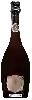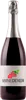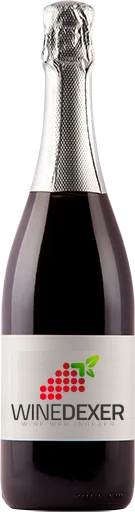
Winery La Quarta VinícolaCava Semi Sec Rosé
 Sparkling wine


In the mouth this sparkling wine is a with a nice vivacity and a fine and pleasant bubble.
This wine generally goes well with appetizers and snacks, lean fish or shellfish.
Taste structure of the Cava Semi Sec Rosé from the Winery La Quarta Vinícola
Light | Bold | |
Soft | Acidic | |
Gentle | Fizzy |
In the mouth the Cava Semi Sec Rosé of Winery La Quarta Vinícola in the region of Cava is a with a nice vivacity and a fine and pleasant bubble.
Food and wine pairings with Cava Semi Sec Rosé
Pairings that work perfectly with Cava Semi Sec Rosé



Original food and wine pairings with Cava Semi Sec Rosé


The Cava Semi Sec Rosé of Winery La Quarta Vinícola matches generally quite well with dishes of shellfish, appetizers and snacks or lean fish such as recipes of shrimp with cream and fettuccine, tapenade with green olives or oven marinated swordfish.
Details and technical informations about Winery La Quarta Vinícola's Cava Semi Sec Rosé.
Discover the grape variety: Aromella
Interspecific crossing between traminette and 34 Ravat obtained in 1976 by Bruce Reisch at the Experimental Station of Cornell University in Geneva (United States). It must be noted that this variety can only be found in a few American wine regions, which means that its multiplication is very limited. In France, it is almost unknown.
Last vintages of this wine
The best vintages of Cava Semi Sec Rosé from Winery La Quarta Vinícola are 0
Informations about the Winery La Quarta Vinícola
The Winery La Quarta Vinícola is one of of the world's great estates. It offers 26 wines for sale in the of Cava to come and discover on site or to buy online.

The wine region of Cava
Cava is Spain's signature style of Sparkling wine, and the Iberian Peninsula's answer to Champagne. The traditional Grape varieties used in Cava were Macabeo, Parellada and Xarel-lo, but the Champagne varieties Chardonnay and Pinot Noir are also used. While the first Cava was produced exclusively in Catalonia - specifically in a small town called San Sadurní de Noya - modern Cava can be sourced from various regions of Spain. Aragon, Navarre, Rioja, Pais Vasco, Valencia and Extremadura have specific delimited areas that can benefit from the designation of origin.
The word of the wine: Round
Said of a wine that is harmonious and smooth, offering no harshness in the mouth.