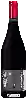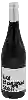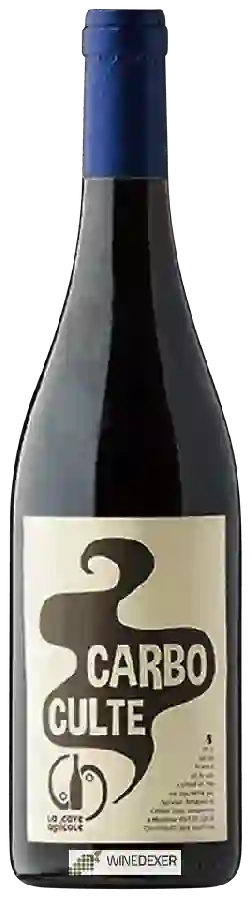
La Cave ApicoleCarbo Culte
 Red wine


This wine is a blend of 2 varietals which are the Lledoner pelut and the Mourvèdre.
In the mouth this red wine is a with a nice balance between acidity and tannins.
This wine generally goes well with beef

Taste structure of the Carbo Culte from the La Cave Apicole
Light | Bold | |
Smooth | Tannic | |
Dry | Sweet | |
Soft | Acidic |
In the mouth the Carbo Culte of La Cave Apicole in the region of Vin de France is a with a nice balance between acidity and tannins.
Wine flavors and olphactive analysis






On the nose the Carbo Culte of La Cave Apicole in the region of Vin de France often reveals types of flavors of cherry, earthy or minerality and sometimes also flavors of raspberry, white pepper or rhubarb.
Food and wine pairings with Carbo Culte
Pairings that work perfectly with Carbo Culte

Original food and wine pairings with Carbo Culte
The Carbo Culte of La Cave Apicole matches generally quite well with dishes such as recipes .
Details and technical informations about La Cave Apicole's Carbo Culte.
Discover the grape variety: Lledoner pelut
Generous, supple reds with an intense ruby hue, rounded tannins and a broad palate, with solar aromas of ripe red fruits (cherry, raspberry, pomegranate), black fruits, garrigue, soft spices and Mediterranean notes. Full-bodied and warm. Component of Côtes du Roussillon AOC, Côtes du Roussillon Villages AOC and Priorat DOQ blends. Hairy-leaved mutation of grenache noir (lledoner = grenache in Catalan), a Catalan-Roussillon signature.
Last vintages of this wine

The best vintages of Carbo Culte from La Cave Apicole are 2022, 2019, 2010, 2021 and 2020.
Informations about the La Cave Apicole
The La Cave Apicole is one of of the world's greatest estates. It offers 12 wines for sale in the of Vin de France to come and discover on site or to buy online.

The wine region of Vin de France
The freest category of French wine, the playground of winemakers working outside the AOC. All styles combined: fruity reds, lively or ambitious whites, everyday rosés, unusual blends, natural wines, atypical grapes (Petit Manseng in Languedoc, Riesling in Provence), experimental winemaking (skin-contact whites, no sulphur). Grape and vintage labelling allowed, no geographic constraint. From the pop, convivial cuvée to the artisan gem: freedom in a bottle.
The word of the wine: Côte des Bar
This is the name given to the vineyards of the Aube, which are closer to Burgundy, and some of the wines produced here bear witness to this proximity. The pinot noir dominates, the meunier is practically absent. Two crus have become references: Riceys, where a rosé without bubbles is also produced, and Montgueux near Troyes, renowned for its Chardonnay.