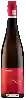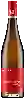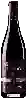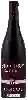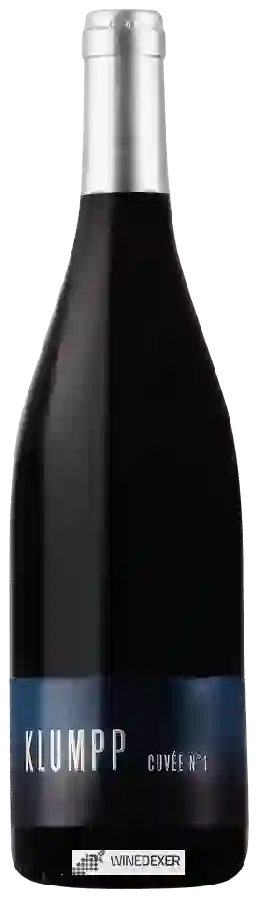
Winery KlumppCuvée No. 1
 Red wine



This wine generally goes well with vegetarian
Wine flavors and olphactive analysis




On the nose the Cuvée No. 1 of Winery Klumpp in the region of Baden often reveals types of flavors of cherry, blackberry or leather and sometimes also flavors of black fruits, non oak or earth.
Food and wine pairings with Cuvée No. 1
Pairings that work perfectly with Cuvée No. 1

Original food and wine pairings with Cuvée No. 1
The Cuvée No. 1 of Winery Klumpp matches generally quite well with dishes of vegetarian such as recipes of quiche with bacon and gruyère cheese.
Details and technical informations about Winery Klumpp's Cuvée No. 1.
Discover the grape variety: Sérénèze de Voreppe
A very old grape variety that was once grown in the Grésivaudan region, and more generally in the Isère Valley from Grenoble to Tullins. It could also be found in Savoie and in the northern part of the Drôme. It should be noted that it was confused for a long time - even today - with the ciréné de Romans with which it shares many synonyms including sérenèze. According to Thierry Lacombe (I.N.R.A./Montpellier), it is the result of a natural intraspecific cross between the white gouais and the chatus. Sérénèze de Voreppe is registered in the Official Catalogue of wine grape varieties, list A1, under the name Sérénèze.
Last vintages of this wine
The best vintages of Cuvée No. 1 from Winery Klumpp are 2012, 2015, 2014, 2018 and 2017.
Informations about the Winery Klumpp
The Winery Klumpp is one of of the world's greatest estates. It offers 36 wines for sale in the of Baden to come and discover on site or to buy online.

The wine region of Baden
Baden is the southernmost of Germany's 13 official wine regions. It is also the warmest. Its relatively sunny, DryClimate permits the production of good-quality Spätburgunder (Pinot Noir) and ripe, relatively Full-bodied">Full-bodied examples of Grauburgunder (Pinot Gris) and Weissburgunder (Pinot Blanc). These are often made in oaked styles.
The word of the wine: White winemaking
White wines are obtained by fermentation of the juice after pressing. A pre-fermentation maceration is sometimes practiced to extract the aromatic substances from the skins. White wines are normally made from white grapes, but can also be made from red grapes (blanc de noirs). The grapes are then pressed as soon as they arrive at the vat house without maceration in order to prevent the colouring matter contained in the skins from "staining" the wine.