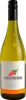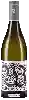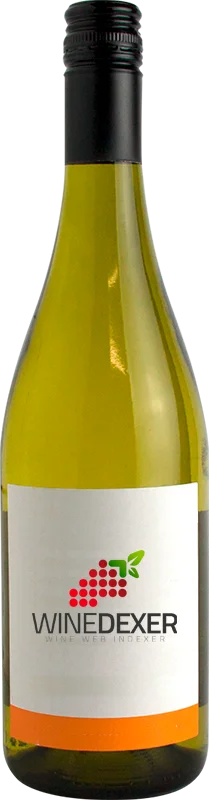
Winery Kloster LimburgGrauer Burgunder Trocken
 White wine


In the mouth this white wine is a .
This wine generally goes well with pork, cured meat or mushrooms.
Taste structure of the Grauer Burgunder Trocken from the Winery Kloster Limburg
Light | Bold | |
Dry | Sweet | |
Soft | Acidic |
In the mouth the Grauer Burgunder Trocken of Winery Kloster Limburg in the region of Pfalz is a .
Food and wine pairings with Grauer Burgunder Trocken
Pairings that work perfectly with Grauer Burgunder Trocken


Original food and wine pairings with Grauer Burgunder Trocken

The Grauer Burgunder Trocken of Winery Kloster Limburg matches generally quite well with dishes of pork, spicy food or mushrooms such as recipes of currywurst, veal tagine with preserved lemons and saffron or grandma's chicken casserole.
Details and technical informations about Winery Kloster Limburg's Grauer Burgunder Trocken.
Discover the grape variety: Tannat
Tannat is a red grape variety from Béarn which belongs to the cotoïdes family. Present in several vineyards of France, it occupies nearly 3,000 ha. Its leaves are reddish with tan patches. Its bunches are either of normal size or larger. Its berries have a thin skin and are rounded. Its foliage has a swarthy appearance. This variety must be pruned long because it is vigorous. It likes sandy and gravelly soils. Tannat is often exposed to leafhoppers and mites. It is also somewhat susceptible to grey rot. It has 11 approved clones, including 474, 717 and 794. Once mature, this variety produces acidic, fruity, tannic, acidic and full-bodied wines. Various aromas emerge, notably tobacco, cinnamon and exotic wood. Tannat is rarely used alone. It is combined with iron-servadou to obtain a fruitier taste or with cabernet sauvignon to be more rounded.
Last vintages of this wine
The best vintages of Grauer Burgunder Trocken from Winery Kloster Limburg are 2017, 0
Informations about the Winery Kloster Limburg
The Winery Kloster Limburg is one of of the world's greatest estates. It offers 10 wines for sale in the of Pfalz to come and discover on site or to buy online.

The wine region of Pfalz
Pfalz is a key wine producing region in western Germany, located between the Rhein/Rhine river and the low-lying Haardt mountain range (a natural continuation of the Alsatian Vosges). It covers a rectangle of land 45 miles (75km) Long and 15 miles (25km) wide. To the NorthLiesRheinhessen; to the South, the French border and Alsace. In terms of both quality and quantity, Pfalz is one of Germany's most important regions, and one which shows great promise for the future.
The word of the wine: Oenologist
Specialist in wine-making techniques. It is a profession and not a passion: one can be an oenophile without being an oenologist (and the opposite too!). Formerly attached to the Faculty of Pharmacy, oenology studies have become independent and have their own university course. Learning to make wine requires a good chemical background but also, increasingly, a good knowledge of the plant. Some oenologists work in laboratories (analysis). Others, the consulting oenologists, work directly in the properties.