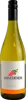
Winery Kloster EberbachAssmannshäuser Spätburgunder Trocken
 Red wine



In the mouth this red wine is a with a nice freshness.
This wine generally goes well with poultry, beef or veal.
Taste structure of the Assmannshäuser Spätburgunder Trocken from the Winery Kloster Eberbach
Light | Bold | |
Smooth | Tannic | |
Dry | Sweet | |
Soft | Acidic |
In the mouth the Assmannshäuser Spätburgunder Trocken of Winery Kloster Eberbach in the region of Rheingau is a with a nice freshness.
Wine flavors and olphactive analysis



On the nose the Assmannshäuser Spätburgunder Trocken of Winery Kloster Eberbach in the region of Rheingau often reveals types of flavors of earth, oak or spices and sometimes also flavors of red fruit.
Food and wine pairings with Assmannshäuser Spätburgunder Trocken
Pairings that work perfectly with Assmannshäuser Spätburgunder Trocken



Original food and wine pairings with Assmannshäuser Spätburgunder Trocken

The Assmannshäuser Spätburgunder Trocken of Winery Kloster Eberbach matches generally quite well with dishes of beef, veal or game (deer, venison) such as recipes of beef fashion, vienna cutlets or duck legs confit.
Details and technical informations about Winery Kloster Eberbach's Assmannshäuser Spätburgunder Trocken.
Discover the grape variety: Rubi
Pink selection made in Brazil, following a natural coloured mutation of the italia, discovered in 1981 by San Giorgio Jonico. Since 24.08.2009, it is registered in the Official Catalogue of table grape varieties, list A1. In Italy, a more colourful mutation of the Rubi was discovered, called benitaka, which is more uniform in berry colour and ripens about a week earlier. The black brasil variety, which can be found in Brazil, is said to be a natural mutation of benitaka. Finally, Rubi should not be confused with ruby seedless, also a pink apyrene grape.
Last vintages of this wine
The best vintages of Assmannshäuser Spätburgunder Trocken from Winery Kloster Eberbach are 2015, 0
Informations about the Winery Kloster Eberbach
The Winery Kloster Eberbach is one of of the world's great estates. It offers 107 wines for sale in the of Assmannshausen to come and discover on site or to buy online.

The wine region of Assmannshausen
The wine region of Assmannshausen is located in the region of Rheingau of Germany. Wineries and vineyards like the Domaine Kloster Eberbach or the Domaine Kloster Eberbach produce mainly wines red. The most planted grape varieties in the region of Assmannshausen are Pinot noir, they are then used in wines in blends or as a single variety. On the nose of Assmannshausen often reveals types of flavors of earth, oak or spices and sometimes also flavors of red fruit, non oak or microbio.
The wine region of Rheingau
Rheingau is one of the most important of Germany's 13 Anbaugebiete wine regions. However it is far from the biggest; with 3,076 hectares (7,600 acres) of Vineyard">Vineyards documented in 2012, its output is around one tenth of that from the Pfalz and Rheinhessen regions. Located on the Rhine a 20-minute drive west of Frankfurt, the -gau suffix denotes that it was once a county of the Frankish Empire. The classic Rheingau wine is a DryRiesling with pronounced Acidity and aromas of citrus fruits and smoke-tinged minerality – typically more "masculine" than its equivalent from the Mosel.
The word of the wine: Yeast
Micro-organisms at the base of all fermentative processes. A wide variety of yeasts live and thrive naturally in the vineyard, provided that treatments do not destroy them. Unfortunately, their replacement by laboratory-selected yeasts is often the order of the day and contributes to the standardization of the wine. Yeasts are indeed involved in the development of certain aromas.