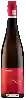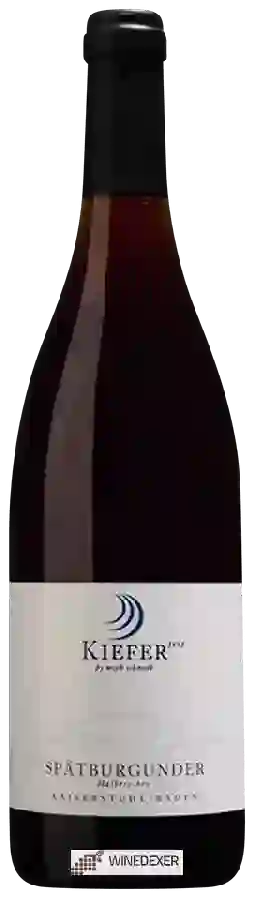
Winery KieferSpätburgunder Halbtrocken
 Red wine


In the mouth this red wine is a with a nice freshness.
This wine generally goes well with poultry, beef or veal.
Taste structure of the Spätburgunder Halbtrocken from the Winery Kiefer
Light | Bold | |
Smooth | Tannic | |
Dry | Sweet | |
Soft | Acidic |
In the mouth the Spätburgunder Halbtrocken of Winery Kiefer in the region of Baden is a with a nice freshness.
Food and wine pairings with Spätburgunder Halbtrocken
Pairings that work perfectly with Spätburgunder Halbtrocken



Original food and wine pairings with Spätburgunder Halbtrocken

The Spätburgunder Halbtrocken of Winery Kiefer matches generally quite well with dishes of beef, veal or game (deer, venison) such as recipes of roast beef in a foie gras and chanterelle crust, express veal stew in a pressure cooker or duck with orange.
Details and technical informations about Winery Kiefer's Spätburgunder Halbtrocken.
Discover the grape variety: Malvoisie de Toscane
It was cultivated in ancient times and is believed to be of Greek origin. In Italy, associated with Trebbiano Toscano, it was used to produce the famous Chianti: these two white varieties are no longer part of the vineyard. In France, Tuscan Malvasia is practically unknown. It should be noted that many grape varieties have "malvasia" as a synonym, so confusion between them is always possible.
Last vintages of this wine
The best vintages of Spätburgunder Halbtrocken from Winery Kiefer are 0
Informations about the Winery Kiefer
The Winery Kiefer is one of of the world's great estates. It offers 85 wines for sale in the of Baden to come and discover on site or to buy online.

The wine region of Baden
Baden is the southernmost of Germany's 13 official wine regions. It is also the warmest. Its relatively sunny, DryClimate permits the production of good-quality Spätburgunder (Pinot Noir) and ripe, relatively Full-bodied">Full-bodied examples of Grauburgunder (Pinot Gris) and Weissburgunder (Pinot Blanc). These are often made in oaked styles.
The word of the wine: N-D
Negociant-distributor. In Champagne, a company that buys finished wines in bottles that are dressed under a brand name with the merchant's own labels.