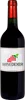
Winery Karl SchäeferSpätburgunder
 Red wine



In the mouth this red wine is a with a nice freshness.
This wine generally goes well with poultry, beef or veal.
Taste structure of the Spätburgunder from the Winery Karl Schäefer
Light | Bold | |
Smooth | Tannic | |
Dry | Sweet | |
Soft | Acidic |
In the mouth the Spätburgunder of Winery Karl Schäefer in the region of Pfalz is a with a nice freshness.
Food and wine pairings with Spätburgunder
Pairings that work perfectly with Spätburgunder



Original food and wine pairings with Spätburgunder

The Spätburgunder of Winery Karl Schäefer matches generally quite well with dishes of beef, veal or game (deer, venison) such as recipes of roasted fillet of beef with parsley, fillet of beef with morels or duck aiguillettes.
Details and technical informations about Winery Karl Schäefer's Spätburgunder.
Discover the grape variety: Meslier Saint François
Meslier Saint François is a French grape variety that comes from the Gatinais, located south of the Paris basin. It was obtained from a cross between Chenin and Gouais Blanc. It is planted on a surface area of 50 ha in France and is often confused with Arbois, hence the synonym it shares with the latter, Orbois. Its berries and clusters are of normal size. Its adult leaves have convex teeth. Meslier Saint François is not very vigorous, but it remains fertile. It buds early, 3 days before Chasselas. It is often exposed to spring frosts and is susceptible to oidium and grey rot. Meslier Saint François produces flat, light wines with little alcohol. When distilled, its eaux de vie are full of bouquet and fine. It can thus be used in the blending of grape varieties that produce cognac or armagnac.
Last vintages of this wine
The best vintages of Spätburgunder from Winery Karl Schäefer are 0
Informations about the Winery Karl Schäefer
The Winery Karl Schäefer is one of of the world's great estates. It offers 35 wines for sale in the of Pfalz to come and discover on site or to buy online.

The wine region of Pfalz
Pfalz is a key wine producing region in western Germany, located between the Rhein/Rhine river and the low-lying Haardt mountain range (a natural continuation of the Alsatian Vosges). It covers a rectangle of land 45 miles (75km) Long and 15 miles (25km) wide. To the NorthLiesRheinhessen; to the South, the French border and Alsace. In terms of both quality and quantity, Pfalz is one of Germany's most important regions, and one which shows great promise for the future.
The word of the wine: Wirehood
Flexible metal fastener used to hold the cork of champagne bottles.