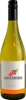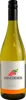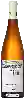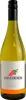
Winery Karl Joh. MolitorLeider Geil Grauburgunder Trocken
 White wine



In the mouth this white wine is a .
This wine generally goes well with pork, cured meat or mushrooms.
Taste structure of the Leider Geil Grauburgunder Trocken from the Winery Karl Joh. Molitor
Light | Bold | |
Dry | Sweet | |
Soft | Acidic |
In the mouth the Leider Geil Grauburgunder Trocken of Winery Karl Joh. Molitor in the region of Rheingau is a .
Food and wine pairings with Leider Geil Grauburgunder Trocken
Pairings that work perfectly with Leider Geil Grauburgunder Trocken


Original food and wine pairings with Leider Geil Grauburgunder Trocken

The Leider Geil Grauburgunder Trocken of Winery Karl Joh. Molitor matches generally quite well with dishes of pork, spicy food or mushrooms such as recipes of sauerkraut (with tips so to do!!!), hawaiian pizza or light lasagne without béchamel sauce.
Details and technical informations about Winery Karl Joh. Molitor's Leider Geil Grauburgunder Trocken.
Discover the grape variety: Cornichon blanc
A very old variety that has been multiplied in many Mediterranean wine-producing countries, due to the fact that its grapes ripen quite late. It is only in Italy and Greece that it still occupies a significant area. In France, it is only found among amateur gardeners and/or collectors. By its foliage in particular, the white gherkin is different from the purple gherkin this last one is given as very little sensitive to the grey rot.
Last vintages of this wine
The best vintages of Leider Geil Grauburgunder Trocken from Winery Karl Joh. Molitor are 2017, 2019, 0
Informations about the Winery Karl Joh. Molitor
The Winery Karl Joh. Molitor is one of of the world's greatest estates. It offers 51 wines for sale in the of Rheingau to come and discover on site or to buy online.

The wine region of Rheingau
Rheingau is one of the most important of Germany's 13 Anbaugebiete wine regions. However it is far from the biggest; with 3,076 hectares (7,600 acres) of Vineyard">Vineyards documented in 2012, its output is around one tenth of that from the Pfalz and Rheinhessen regions. Located on the Rhine a 20-minute drive west of Frankfurt, the -gau suffix denotes that it was once a county of the Frankish Empire. The classic Rheingau wine is a DryRiesling with pronounced Acidity and aromas of citrus fruits and smoke-tinged minerality – typically more "masculine" than its equivalent from the Mosel.
The word of the wine: Dismantling
After devatting, the pomace is removed from the tank. If this operation is carried out manually, it is important to ventilate the vat well to avoid the risk of accidents due to the presence of carbon dioxide.