The Winery JG of Nahe
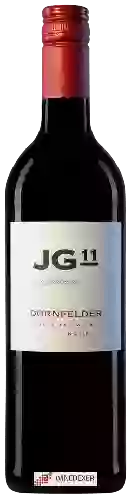
The Winery JG is one of the best wineries to follow in Nahe.. It offers 9 wines for sale in of Nahe to come and discover on site or to buy online.
Looking for the best Winery JG wines in Nahe among all the wines in the region? Check out our tops of the best red, white or effervescent Winery JG wines. Also find some food and wine pairings that may be suitable with the wines from this area. Learn more about the region and the Winery JG wines with technical and enological descriptions.
How Winery JG wines pair with each other generally quite well with dishes of pasta, veal or pork such as recipes of pasta with artichoke hearts and bacon, pljeskavica (balkan hamburger) or rabbit socks in gibelotte.
In the mouth the red wine of Winery JG. is a with a nice freshness.
Nahe is one of the smaller German wine regions, named after the Nahe river which joins the Rhein at Rheinhessen/bingen">Bingen. The viticultural carea here is characterised by dramatic topography with steep slopes and craggy outcrops of metamorphic rock. Like most of the regions on or near the Rhine, its most prestigious wines are made from Riesling.
There are around 4,000 hectares (10,000 acres) of Vineyards, spread across seven Grosslagen (wine districts) and over 300 Einzellagen (individual vineyard sites).
The total vineyard area has declined – like the Mosel there are many steep vineyard sites here, and while they can produce great quality, the effort required to Farm them has led to many being abandoned. The subregion of Alsenztal, once covered in vineyards, has now almost ceased to exist.
The wider region can be divided into three main sections. From Sobernheim to Bad Kreuznach the Nahe river flows west to east and is known as the Upper Nahe.
Steeper slopes of volcanic or weathered stone or reddish slate with clay and an ideal southern exposure give more Finesse, minerality and spiciness to fine Riesling. The area is also known for its gemstones. The most concentrated area of top vineyards in the Nahe runs from Schlossböckelheim to Traisen, with Monzingen – around 6 miles (10km) further to the west being the most acclaimed site further upstream.
Climate and Geography
The undulating topography here creates multiple diverse mesoclimates for viticulture.
How Winery JG wines pair with each other generally quite well with dishes of pork, rich fish (salmon, tuna etc) or spicy food such as recipes of alsatian sauerkraut, tuna, pepper and tomato quiche or genuine chicken tagine olive and lemon confit tagine with argan oil.
Müller-Thurgau shows the character of its noble origins. This Swiss white grape variety is a cross between the royal madeleine and the riesling. The idea that the latter was crossed with the sylvaner is irrelevant. The variety can be recognized by its vigorous character and its semi-erect habit. Preferring rich soils and short prunings, the plant sees its buds open quite early. The buds are cottony and soft green in color. The slightly embossed and tormented blade, with 5 to 7 lobes, makes it possible to distinguish the adult leaves. The clusters appear compact, pyramidal or cylindrical in shape and small to medium in size. The flavour of the Müller-Turgau berries is reminiscent of Muscat. The juicy and crunchy pulp is revealed under a greyish skin. When ripe, the fruit has a mottled shell on a golden yellow background. Switzerland prefers to extract the juice from this variety. The wine made from it is rather heavy and does not keep well.
How Winery JG wines pair with each other generally quite well with dishes of veal, pork or game (deer, venison) such as recipes of stuffed veal breast, quiche without pastry or rabbit italian style.
Said of a typical wine that stands out for its originality. Used in the plural, it refers to all the organoleptic components of a wine (flavours and tactile sensations).
Planning a wine route in the of Nahe? Here are the wineries to visit and the winemakers to meet during your trip in search of wines similar to Winery JG.
German, intraspecific cross made in 1955 by August Karl Herold (1902-1973) between the helfensteiner and the heroldrebe (more details, click here!). With these same parents he also obtained the hegel. The Dornfelder can be found in Switzerland, United Kingdom, Belgium, Germany, Austria, Czech Republic, Canada, United States, ... . Virtually unknown in France, we nevertheless recognize a certain interest in it due to its short phenological cycle and the quality of its wines, both rosé and red.