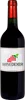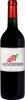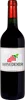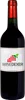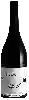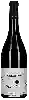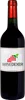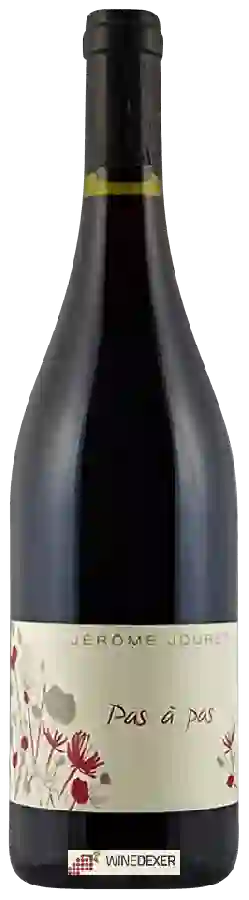
Winery Jérôme JouretPas à Pas
 Red wine



This wine generally goes well with beef, mature and hard cheese or spicy food.
The Pas à Pas of the Winery Jérôme Jouret is in the top 80 of wines of Ardèche.

Food and wine pairings with Pas à Pas
Pairings that work perfectly with Pas à Pas



Original food and wine pairings with Pas à Pas
The Pas à Pas of Winery Jérôme Jouret matches generally quite well with dishes of beef, spicy food or mature and hard cheese such as recipes of korean bibimbap, shrimp with curry express or gratin in pink and blue.
Details and technical informations about Winery Jérôme Jouret's Pas à Pas.
Discover the grape variety: Findling
Aromatic, supple whites with a pale golden robe, an ample palate with moderate acidity, and signature muscat aromas of white flowers (elderflower), yellow fruits (peach) and riper notes than its parent Müller-Thurgau. Accessible and fruity profile. Grown on a few hectares in Rhineland-Palatinate for local cuvées. A mutation of Müller-Thurgau obtained in 1934 in Germany, with smaller bunches and earlier ripening.
Last vintages of this wine
The best vintages of Pas à Pas from Winery Jérôme Jouret are 2016, 2015, 2014
Informations about the Winery Jérôme Jouret
The Winery Jérôme Jouret is one of of the world's greatest estates. It offers 22 wines for sale in the of Ardèche to come and discover on site or to buy online.

The wine region of Ardèche
Vast Rhône IGP with contrasting southern-Rhône terroirs: signature Syrah as king red — fruity and spicy with notes of blackberry, blackcurrant, raspberry, violet and a peppery touch, supple tannins. Round Merlot, structured Cabernet and sunny Grenache as backup. Signature Chardonnay and Viognier as aromatic whites (peach, apricot, white flowers, citrus). Fresh rosés.
The wine region of Méditerranée
Vast IGP of south-east France (Provence, Vaucluse, Var, Corsica, Ardèche), 75% rosés. Fresh, fruity rosés with signature notes of strawberry, raspberry, citrus, white flowers and a Mediterranean touch, taut and thirst-quenching on the palate — the quintessential sunny aperitif. Supple reds blending Grenache, Syrah, Cabernet and Merlot (red fruits, garrigue, spice), full whites of Viognier (apricot, flowers) and Chardonnay. Generous everyday wines, expression of the south.
The word of the wine: Mouth
The mouth is the third stage of wine tasting after the eye and nose. In the mouth, the taster identifies the aromas through the retronasal route, the flavours and the texture. It is in the mouth that the overall balance of the wine is apprehended.