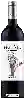
Winery J.P.HenriquesChâteau du Parc Côtes du Roussillon
 Red wine
This wine generally goes well with beef, veal or pasta.
Food and wine pairings with Château du Parc Côtes du Roussillon
Pairings that work perfectly with Château du Parc Côtes du Roussillon



Original food and wine pairings with Château du Parc Côtes du Roussillon
The Château du Parc Côtes du Roussillon of Winery J.P.Henriques matches generally quite well with dishes of beef, pasta or veal such as recipes of beer goulash, maultaschen ( swabian ravioli ) or blanquette of veal in the old way (self-cooker).
Details and technical informations about Winery J.P.Henriques's Château du Parc Côtes du Roussillon.
Discover the grape variety: Sauvignon-Rytos
An interspecific cross between Sauvignon Blanc and Bianca obtained in Italy and in 2002 by the University of Udine and the Institute of Applied Genetics. It should not be confused with the sauvignon-kretos. It can be found in Germany, Poland, ... in France it is almost unknown.
Informations about the Winery J.P.Henriques
The Winery J.P.Henriques is one of of the world's greatest estates. It offers 28 wines for sale in the of Côtes du Roussillon to come and discover on site or to buy online.

The wine region of Côtes du Roussillon
Côtes du Roussillon is an appellation contrôlée for red, white and rosé wines from the Roussillon wine region in southern France. It covers the eastern half of the administrative district of the Pyrénées-Orientales, on the eastern edge of the Pyrenees. The western half of the Pyrenees-Orientales is simply too mountainous for effective viticulture. In the Côtes du Roussillon wine-growing area is the Aspres sub-region.
The wine region of Languedoc-Roussillon
Languedoc (formerly Coteaux du Languedoc) is a key appellation used in the Languedoc-Roussillon wine region of southern France. It covers Dry table wines of all three colors (red, white and rosé) from the entire region, but leaves Sweet and Sparkling wines to other more specialized appellations. About 75% of all Languedoc wines are red, with the remaining 25% split roughly down the middle between whites and rosés. The appellation covers most of the Languedoc region and almost a third of all the vineyards in France.
The word of the wine: Rough
A very astringent and somewhat coarse tannic wine.