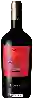
Winery VignalunaCabernet Franc
 Red wine



In the mouth this red wine is a powerful.
This wine generally goes well with beef, game (deer, venison) or lamb.

Taste structure of the Cabernet Franc from the Winery Vignaluna
Light | Bold | |
Smooth | Tannic | |
Dry | Sweet | |
Soft | Acidic |
In the mouth the Cabernet Franc of Winery Vignaluna in the region of Veneto is a powerful.
Food and wine pairings with Cabernet Franc
Pairings that work perfectly with Cabernet Franc



Original food and wine pairings with Cabernet Franc

The Cabernet Franc of Winery Vignaluna matches generally quite well with dishes of beef, pasta or lamb such as recipes of roast beef in a foie gras and chanterelle crust, pasta with basil or steamed lamb shoulder with cumin and coriander.
Details and technical informations about Winery Vignaluna's Cabernet Franc.
Discover the grape variety: Cabernet franc
Supple, fragrant reds with fine tannins and vibrant freshness, showing raspberry, violet, green pepper, pencil lead and gentle spice aromas. Star of the Loire as a single variety (Chinon, Bourgueil, Saumur-Champigny) and of the right bank of Bordeaux in blends (Cheval Blanc at 60%). Also in semi-dry Anjou rosés. A historic Bordeaux variety, parent of Cabernet-Sauvignon, Merlot and Carmenère.
Last vintages of this wine
The best vintages of Cabernet Franc from Winery Vignaluna are 0
Informations about the Winery Vignaluna
The Winery Vignaluna is one of of the world's greatest estates. It offers 9 wines for sale in the of Veneto to come and discover on site or to buy online.

The wine region of Veneto
World star of Prosecco: fresh, light Glera sparklers with notes of pear, green apple and white flowers, fruity, convivial bubbles. Veronese reds from Corvina and Rondinella: light, crisp Bardolino, fruity Valpolicella, opulent, concentrated Amarone DOCG (black cherry, chocolate, raisin) from dried grapes. Mineral, almondy Soave (Garganega) whites, fresh Pinot Grigio. 97,500 ha, Italy's largest production.
The word of the wine: Tries (harvest by)
Harvesting in several successive passages to harvest at their optimal concentration the grapes affected by noble rot. They allow the production of great sweet wines.