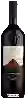
Winery Sauro MauleMy Tai
 Red wine



In the mouth this red wine is a powerful.
This wine generally goes well with beef, game (deer, venison) or lamb.
Taste structure of the My Tai from the Winery Sauro Maule
Light | Bold | |
Smooth | Tannic | |
Dry | Sweet | |
Soft | Acidic |
In the mouth the My Tai of Winery Sauro Maule in the region of Veneto is a powerful.
Food and wine pairings with My Tai
Pairings that work perfectly with My Tai



Original food and wine pairings with My Tai

The My Tai of Winery Sauro Maule matches generally quite well with dishes of beef, pasta or lamb such as recipes of beef tournedos with boursin, lasagna with courgettes and fresh goat cheese or chakchouka.
Details and technical informations about Winery Sauro Maule's My Tai.
Discover the grape variety: Charmont
Intraspecific crossing between Chasselas and Chardonnay, obtained in 1965 by Jean-Louis Simon and selected by André Jacquinet at the Agroscope Changins-Wädenswil research station (Switzerland). This grape variety is known and cultivated in Switzerland, but it can also be found in Hungary, Germany, Italy, etc., and is virtually unknown in France. With the same parents, Jean-Louis Simon also obtained the doral.
Last vintages of this wine
The best vintages of My Tai from Winery Sauro Maule are 2016, 0
Informations about the Winery Sauro Maule
The Winery Sauro Maule is one of of the world's greatest estates. It offers 9 wines for sale in the of Veneto to come and discover on site or to buy online.

The wine region of Veneto
Veneto is an important and growing wine region in northeastern Italy. Veneto is administratively Part of the Triveneto area, aLong with its smaller neighbors, Trentino-Alto Adige and Friuli-Venezia Giulia. In terms of geography, culture and wine styles, it represents a transition from the Alpine and Germanic-Slavic end of Italy to the warmer, drier, more Roman lands to the South. Veneto is slightly smaller than the other major Italian wine regions - Piedmont, Tuscany, Lombardy, Puglia and Sicily - but it produces more wine than any of them.
The word of the wine: Harmonious
Balance of the different organoleptic elements of a wine. This harmony is linked to the typicity of each wine. The sweetness of a sweet wine is an element of its balance, whereas a Sancerre or a Chablis will be asked to be lively and dry.