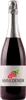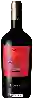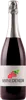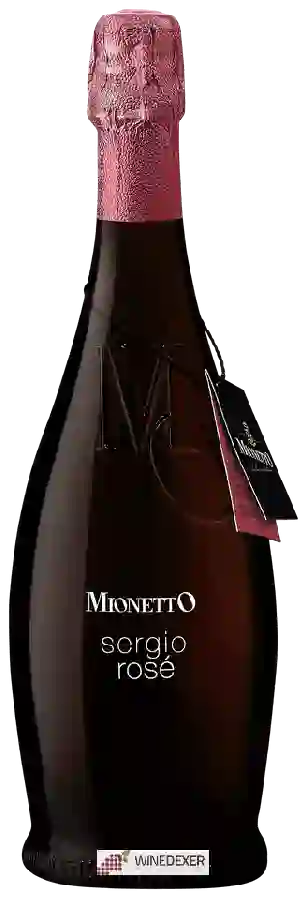
Winery MionettoMo Sergio Rosé
 Sparkling wine



This wine is a blend of 3 varietals which are the Cabernet franc, the Cabernet-Sauvignon and the Merlot.
This wine generally goes well with pork, poultry or beef.

Wine flavors and olphactive analysis


On the nose the Mo Sergio Rosé of Winery Mionetto in the region of Veneto often reveals types of flavors of microbio, citrus fruit or red fruit.
Food and wine pairings with Mo Sergio Rosé
Pairings that work perfectly with Mo Sergio Rosé



Original food and wine pairings with Mo Sergio Rosé



The Mo Sergio Rosé of Winery Mionetto matches generally quite well with dishes of beef, lamb or pork such as recipes of beef miroton, sri lankan lamb rolls (mutton rolls) or baked pork chops.
Details and technical informations about Winery Mionetto's Mo Sergio Rosé.
Discover the grape variety: Cabernet franc
Supple, fragrant reds with fine tannins and vibrant freshness, showing raspberry, violet, green pepper, pencil lead and gentle spice aromas. Star of the Loire as a single variety (Chinon, Bourgueil, Saumur-Champigny) and of the right bank of Bordeaux in blends (Cheval Blanc at 60%). Also in semi-dry Anjou rosés. A historic Bordeaux variety, parent of Cabernet-Sauvignon, Merlot and Carmenère.
Last vintages of this wine
The best vintages of Mo Sergio Rosé from Winery Mionetto are 2014, 2008, 0, 2015
Informations about the Winery Mionetto
The Winery Mionetto is one of of the world's greatest estates. It offers 104 wines for sale in the of Veneto to come and discover on site or to buy online.

The wine region of Veneto
World star of Prosecco: fresh, light Glera sparklers with notes of pear, green apple and white flowers, fruity, convivial bubbles. Veronese reds from Corvina and Rondinella: light, crisp Bardolino, fruity Valpolicella, opulent, concentrated Amarone DOCG (black cherry, chocolate, raisin) from dried grapes. Mineral, almondy Soave (Garganega) whites, fresh Pinot Grigio. 97,500 ha, Italy's largest production.
The word of the wine: Nouaison
Phase of the vegetative cycle of the vine following flowering and corresponding to the formation of the grape berry.