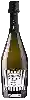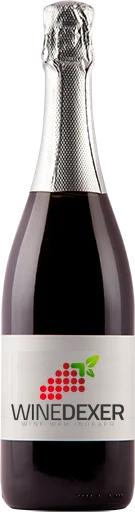
Winery La Vigna di SarahNettare di Luna Conegliano-Valdobbiadene Prosecco Superiore
 Sparkling wine



In the mouth this sparkling wine is a with a nice vivacity and a fine and pleasant bubble.
This wine generally goes well with vegetarian, appetizers and snacks or shellfish.
Taste structure of the Nettare di Luna Conegliano-Valdobbiadene Prosecco Superiore from the Winery La Vigna di Sarah
Light | Bold | |
Soft | Acidic | |
Gentle | Fizzy |
In the mouth the Nettare di Luna Conegliano-Valdobbiadene Prosecco Superiore of Winery La Vigna di Sarah in the region of Veneto is a with a nice vivacity and a fine and pleasant bubble.
Food and wine pairings with Nettare di Luna Conegliano-Valdobbiadene Prosecco Superiore
Pairings that work perfectly with Nettare di Luna Conegliano-Valdobbiadene Prosecco Superiore



Original food and wine pairings with Nettare di Luna Conegliano-Valdobbiadene Prosecco Superiore


The Nettare di Luna Conegliano-Valdobbiadene Prosecco Superiore of Winery La Vigna di Sarah matches generally quite well with dishes of shellfish, vegetarian or appetizers and snacks such as recipes of seafood pie, zucchini quiche or kale chips.
Details and technical informations about Winery La Vigna di Sarah's Nettare di Luna Conegliano-Valdobbiadene Prosecco Superiore.
Discover the grape variety: Sylvaner
The sylvaner is grown mainly in Germany and Alsace. The buds are somewhat cottony and the young leaves are green. The same applies to the ribbed branches. Once mature, the dominant colour is golden-green and small elliptical berries with small to medium-sized bunches can be seen. The ripe fruit is then adorned by five-lobed leaves. This variety is susceptible to chlorosis, gray mold, powdery mildew and mildew. It is also sensitive to frost and wind because of its long branches. It can be grown in any kind of soil, although it prefers stony, sandy and light soils. It is indeed moderately acidic and offers a complex set of aromas such as bitter almond, fruity and floral background. The taste has an excellent mixture of honey and candied or dried fruits.
Last vintages of this wine
The best vintages of Nettare di Luna Conegliano-Valdobbiadene Prosecco Superiore from Winery La Vigna di Sarah are 0
Informations about the Winery La Vigna di Sarah
The Winery La Vigna di Sarah is one of of the world's greatest estates. It offers 12 wines for sale in the of Conegliano-Valdobbiadene Prosecco Superiore to come and discover on site or to buy online.

The wine region of Conegliano-Valdobbiadene Prosecco Superiore
The wine region of Conegliano-Valdobbiadene Prosecco Superiore is located in the region of Conegliano-Valdobbiadene Prosecco of Vénétie of Italy. Wineries and vineyards like the Domaine PDC di De Conti Pietro or the Domaine Altaneve produce mainly wines sparkling, sweet and red. The most planted grape varieties in the region of Conegliano-Valdobbiadene Prosecco Superiore are Glera, Chardonnay and Sangiovese, they are then used in wines in blends or as a single variety. On the nose of Conegliano-Valdobbiadene Prosecco Superiore often reveals types of flavors of citrus, honey or ginger and sometimes also flavors of lemon, white peach or stone.
The wine region of Veneto
Veneto is an important and growing wine region in northeastern Italy. Veneto is administratively Part of the Triveneto area, aLong with its smaller neighbors, Trentino-Alto Adige and Friuli-Venezia Giulia. In terms of geography, culture and wine styles, it represents a transition from the Alpine and Germanic-Slavic end of Italy to the warmer, drier, more Roman lands to the South. Veneto is slightly smaller than the other major Italian wine regions - Piedmont, Tuscany, Lombardy, Puglia and Sicily - but it produces more wine than any of them.
The word of the wine: Presses
The juice that results from pressing the grapes after fermentation. At the end of the maceration, the vats are emptied, the first juice obtained is called the free-run wine and the marc remaining at the bottom of the vat is then pressed to give the press wine. We say more quickly "the presses". Their quality varies according to the vintage and the maceration. A too vigorous extraction releases the tannins of pips and the wine of press can then prove to be very astringent. Often the winemaker raises it separately, deciding later whether or not to incorporate it totally or partially into the grand vin.