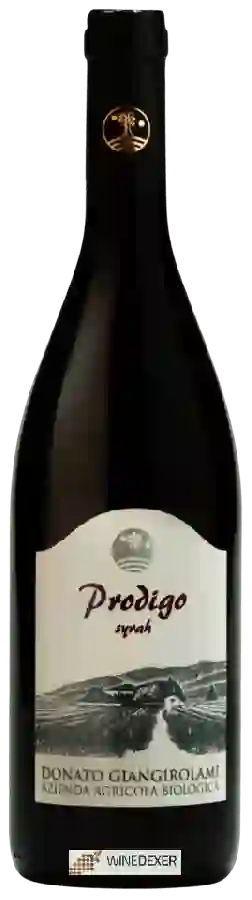
Winery Donato GiangirolamiProdigo
 Red wine



In the mouth this red wine is a powerful with a nice balance between acidity and tannins.
This wine generally goes well with poultry, beef or veal.

Taste structure of the Prodigo from the Winery Donato Giangirolami
Light | Bold | |
Smooth | Tannic | |
Dry | Sweet | |
Soft | Acidic |
In the mouth the Prodigo of Winery Donato Giangirolami in the region of Lazio is a powerful with a nice balance between acidity and tannins.
Wine flavors and olphactive analysis




On the nose the Prodigo of Winery Donato Giangirolami in the region of Lazio often reveals types of flavors of earth, oak or spices and sometimes also flavors of red fruit, black fruit.
Food and wine pairings with Prodigo
Pairings that work perfectly with Prodigo



Original food and wine pairings with Prodigo

The Prodigo of Winery Donato Giangirolami matches generally quite well with dishes of beef, pasta or veal such as recipes of beef bourguignon in the oven of nanou, phad thai (thai style fried noodles) or osso bucco of veal.
Details and technical informations about Winery Donato Giangirolami's Prodigo.
Discover the grape variety: Branco-Escola
Simple, fresh whites best drunk young, with a pale golden robe, a light palate with moderate acidity, and discreet aromas of white flowers, white-flesh fruits (apple) and neutral notes. Vigorous and productive. Often blended in Douro DOC whites, contributing to regional typicity and used locally for young-drinking table wines. Native Portuguese white grape from the Douro and Trás-os-Montes.
Last vintages of this wine
The best vintages of Prodigo from Winery Donato Giangirolami are 2017, 2016, 2014, 0 and 2012.
Informations about the Winery Donato Giangirolami
The Winery Donato Giangirolami is one of of the world's greatest estates. It offers 13 wines for sale in the of Lazio to come and discover on site or to buy online.

The wine region of Lazio
Two-millennia Roman vineyard, predominantly white on the volcanic soils of the Castelli Romani. Frascati DOC as figurehead: fresh, accessible whites based on Malvasia and Trebbiano, notes of green apple, white flowers and almond, slightly bitter finish. Also Bellone and Grechetto. Emblematic red: Cesanese del Piglio DOCG, fleshy with notes of ripe cherry, dry herbs and spice, round tannins.
The word of the wine: Sarment
Vine shoot of the year.