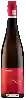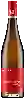
Winery IhringerSilvaner Halbtrocken
 White wine
In the mouth this white wine is a with a nice freshness.
This wine generally goes well with pork, vegetarian or poultry.
Taste structure of the Silvaner Halbtrocken from the Winery Ihringer
Light | Bold | |
Dry | Sweet | |
Soft | Acidic |
In the mouth the Silvaner Halbtrocken of Winery Ihringer in the region of Baden is a with a nice freshness.
Food and wine pairings with Silvaner Halbtrocken
Pairings that work perfectly with Silvaner Halbtrocken



Original food and wine pairings with Silvaner Halbtrocken


The Silvaner Halbtrocken of Winery Ihringer matches generally quite well with dishes of veal, pork or vegetarian such as recipes of dafina, rabbit with cider and mushrooms or quiche with leeks and fresh salmon from flo.
Details and technical informations about Winery Ihringer's Silvaner Halbtrocken.
Discover the grape variety: Plavac mali
Croatian Dalmatia more precisely. It can also be found in Greece (Macedonia), Montenegro, Italy, Bulgaria and Romania. According to genetic analyses conducted by the California University of Davis (United States), it is the result of an intraspecific cross between zinfandel (called crljenak kastelanski or pribidag in Croatia) and dobricic, another Croatian grape variety that is now somewhat endangered. - Synonyms: pagadebit veliki, sarak, zelenak (for all the synonyms of the grape varieties, click here!).
Informations about the Winery Ihringer
The Winery Ihringer is one of of the world's great estates. It offers 86 wines for sale in the of Baden to come and discover on site or to buy online.

The wine region of Baden
German capital of Pinot Noir (Spätburgunder): silky, fine reds with notes of red fruits, cherry, undergrowth and sweet spices, melted tannins. Round Grauburgunder (Pinot Gris), lively Weissburgunder, supple Müller-Thurgau, mineral Riesling. Germany's 3rd region (15,000 ha) in Baden-Württemberg facing Alsace, one of the country's warmest climates, volcanic soils at the Kaiserstuhl. Cradle of modern great German reds, elegant and fine.
The word of the wine: Net
Said of a frank wine with well-defined characteristics.