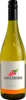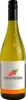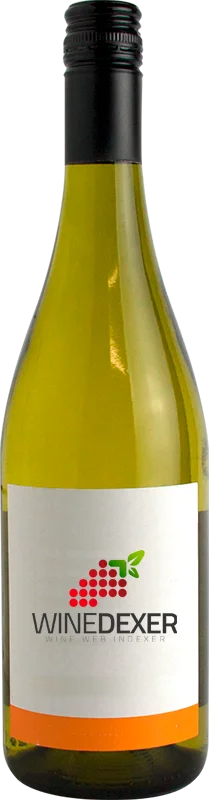
Winery HothumGrüner Silvaner Trocken
 White wine



In the mouth this white wine is a with a nice freshness.
This wine generally goes well with pork, vegetarian or poultry.
Taste structure of the Grüner Silvaner Trocken from the Winery Hothum
Light | Bold | |
Dry | Sweet | |
Soft | Acidic |
In the mouth the Grüner Silvaner Trocken of Winery Hothum in the region of Rheinhessen is a with a nice freshness.
Food and wine pairings with Grüner Silvaner Trocken
Pairings that work perfectly with Grüner Silvaner Trocken



Original food and wine pairings with Grüner Silvaner Trocken


The Grüner Silvaner Trocken of Winery Hothum matches generally quite well with dishes of veal, pork or vegetarian such as recipes of flank steak with shallots in red wine sauce, rabbit with hunter's sauce or leek, goat cheese and bacon quiche.
Details and technical informations about Winery Hothum's Grüner Silvaner Trocken.
Discover the grape variety: Merlot
Merlot is a red grape variety with small black berries that appeared at the end of the 18th century. It is produced in most of the Bordeaux terroirs, where it represents 58% of the planted area, and its best terroir is located in Pomerol and Saint-Emilion on cool, clay-limestone soils. At the mythical Château Pétrus, the wine is made with 95% Merlot, with a dark, dense colour, aromas of red and black fruits and a superb range of flavours, the Merlot transforms during its ageing to give way to notes of prunes, undergrowth and spices. On the palate, it is supple with distinguished tannins. It is often blended with Cabernet Sauvignon. Merlot is no longer exclusive to Bordeaux, it is nowadays vinified all over the world.
Last vintages of this wine
The best vintages of Grüner Silvaner Trocken from Winery Hothum are 2014, 0, 2016
Informations about the Winery Hothum
The Winery Hothum is one of of the world's greatest estates. It offers 28 wines for sale in the of Rheinhessen to come and discover on site or to buy online.

The wine region of Rheinhessen
Rheinhessen is Germany's largest region for producing the quality wines of the Qualitätswein bestimmter Anbaugebiete (QbA) and Prädikatswein designations, with roughly 26,500 hectares (65,000 acres) of Vineyard">Vineyards as of 2014. Many of its most significant viticultural areas are favorably influenced by the Rhine river, which runs aLong its North and eastern borders. The Rhine, along with the Nahe river to the west and the Haardt mountains to its South, form a natural border. Rheinhessen covers an area south of Rheingau, north of Pfalz and east of Nahe, and is located within the Rhineland-Palatinate federal state.
The word of the wine: Arching
A stage in the vegetative cycle of the vine that occurs after the leaves have fallen and is characterized by the drying out of the soft shoots, which are transformed into hard shoots by lignification.