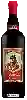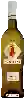
Winery Hidalgo (La Gitana)Blanco
 Natural sweet wine


In the mouth this natural sweet wine is a powerful with a good balance between acidity and sweetness.
This wine generally goes well with appetizers and snacks, mature and hard cheese or cured meat.

Taste structure of the Blanco from the Winery Hidalgo (La Gitana)
Light | Bold | |
Dry | Sweet | |
Soft | Acidic |
In the mouth the Blanco of Winery Hidalgo (La Gitana) in the region of Andalousie is a powerful with a good balance between acidity and sweetness.
Food and wine pairings with Blanco
Pairings that work perfectly with Blanco



Original food and wine pairings with Blanco


The Blanco of Winery Hidalgo (La Gitana) matches generally quite well with dishes of sweet desserts, mature and hard cheese or appetizers and snacks such as recipes of quick chocolate fudge cake, tomato, ham, cheese and mushroom pie or macaroons foie gras / figs.
Details and technical informations about Winery Hidalgo (La Gitana)'s Blanco.
Discover the grape variety: Faberrebe
Aromatic, fine whites with a pale golden robe, an airy palate with preserved acidity, and signature muscat, white flower (acacia, elderflower), white fruit (apple, pear) aromas with delicate floral notes. Also vinified as off-dry styles. Grown in the Rhine and Franconia regions for dry and off-dry aromatic whites. German white grape obtained in 1929 by Georg Scheu in Alzey (Weißburgunder × Müller-Thurgau).
Last vintages of this wine
The best vintages of Blanco from Winery Hidalgo (La Gitana) are 0
Informations about the Winery Hidalgo (La Gitana)
The Winery Hidalgo (La Gitana) is one of of the world's great estates. It offers 35 wines for sale in the of Jerez-Xérès-Sherry to come and discover on site or to buy online.

The wine region of Jerez-Xérès-Sherry
Global cradle of Andalusian Sherry, albariza soils (white calcareous marls) over ~7,000 ha around Jerez. Signature Palomino Fino under flor veil gives lively, saline Fino with signature notes of almond, yeast, green apple and a cutting iodine touch; more marine Manzanilla (Sanlúcar). Unveiled Oloroso in grand oxidation (walnut, caramel, tobacco, leather). Intense sweet black Pedro Ximénez (fig, raisin, coffee, molasses).
The wine region of Andalousie
Dry, sun-baked southern Spain, world cradle of fortified and oxidative wines. Sherry from Jerez is the signature: Palomino Fino under a veil of flor yields lively, saline Fino with signature notes of almond, yeast, green apple and a sharp iodine edge; more maritime Manzanilla (Sanlúcar); unveiled Oloroso in grand oxidation (walnut, caramel, tobacco). Pedro Ximénez from Montilla-Moriles: intense dark sweet (fig, raisin, coffee, molasses). Also muscat Málaga.
The word of the wine: Muscat blanc à petits grains
A white grape variety cultivated since antiquity on the shores of the Mediterranean, it is considered the noblest of the muscats. It is mainly used to make sweet wines, often from mutage. In France, it is the sole variety used in many natural sweet wines: muscat-de-frontignan, muscat-de-mireval, muscat-de-lunel, muscat-de-saint-jean-de-minervois, muscat-de-beaumes-de-venise, muscat-du-cap-corse. Combined with Muscat d'Alexandrie, it gives Muscat-de-Rivesaltes. It is also used to make sparkling white wines (clairette-de-die; moscato d'asti and asti spumante in Italy) and dry wines (alsace-muscat). Powerfully aromatic and complex, its wines evoke fresh grapes, roses, exotic fruits, citrus fruits and spices.