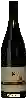
Winery Guido MazzarelloBarbera
 Red wine
In the mouth this red wine is a powerful with a nice freshness.
This wine generally goes well with pork, poultry or veal.
Taste structure of the Barbera from the Winery Guido Mazzarello
Light | Bold | |
Smooth | Tannic | |
Dry | Sweet | |
Soft | Acidic |
In the mouth the Barbera of Winery Guido Mazzarello in the region of Piedmont is a powerful with a nice freshness.
Food and wine pairings with Barbera
Pairings that work perfectly with Barbera



Original food and wine pairings with Barbera


The Barbera of Winery Guido Mazzarello matches generally quite well with dishes of pasta, veal or pork such as recipes of pasta with tuna and tomato, pork tenderloin with mushroom sauce or quiche without pastry.
Details and technical informations about Winery Guido Mazzarello's Barbera.
Discover the grape variety: Merlot khantus
An interspecific cross between Merlot noir and Kozma 20-3 (also the same parents of Merlot khorus) obtained in 2002 by Simone Diego Castellarin and Guido Cipriani at the Institute of Applied Genomics in Udine, Italy. Merlot khantus is particularly resistant to mildew and tolerant to powdery mildew. Known in Italy ... almost unknown in France and not registered in the Official Catalogue of wine grape varieties.
Informations about the Winery Guido Mazzarello
The Winery Guido Mazzarello is one of of the world's great estates. It offers 25 wines for sale in the of Piedmont to come and discover on site or to buy online.

The wine region of Piedmont
Piedmont (Piemonte) holds an unrivalled place among the world's finest wine regions. Located in northwestern Italy, it is home to more DOCG wines than any other Italian region, including such well-known and respected names as Barolo, Barbaresco and Barbera d'Asti. Though famous for its Austere, Tannic, Floral">floral reds made from Nebbiolo, Piedmont's biggest success story in the past decade has been Moscato d'Asti, a Sweet, Sparkling white wine. Piedmont Lies, as its name suggests, at the foot of the Western Alps, which encircle its northern and western sides and form its naturally formidable border with Provence, France.
The word of the wine: Flower
Wine disease resulting in a whitish haze and a vented taste.