The Winery Robert Groffier of Burgundy
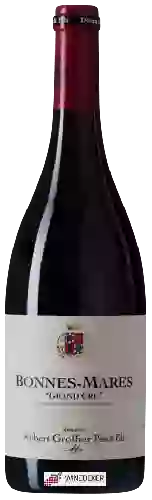
The Winery Robert Groffier is one of the world's great estates. It offers 11 wines for sale in of Burgundy to come and discover on site or to buy online.
Looking for the best Winery Robert Groffier wines in Burgundy among all the wines in the region? Check out our tops of the best red, white or effervescent Winery Robert Groffier wines. Also find some food and wine pairings that may be suitable with the wines from this area. Learn more about the region and the Winery Robert Groffier wines with technical and enological descriptions.
How Winery Robert Groffier wines pair with each other generally quite well with dishes of beef, veal or game (deer, venison) such as recipes of beef stew with white wine, veal escalope with marsala or cassoulet of yesteryear.
On the nose the red wine of Winery Robert Groffier. often reveals types of flavors of cherry, smoke or earthy and sometimes also flavors of blueberry, minerality or red fruit. In the mouth the red wine of Winery Robert Groffier. is a with a nice freshness.
Bourgogne is the catch-all regional appellation title of the Burgundy wine region in eastern France ("Bourgogne" is the French name for Burgundy). Burgundy has a Complex and comprehensive appellation system; counting Premier Cru and Grand Cru titles, the region has over 700 appellation titles for its wines. Thus, Burgundy wines often come from one Vineyard (or several separate vineyards) without an appellation title specific to the region, Village or even vineyard. A standard Burgundy wine may be made from grapes grown in one or more of Burgundy's 300 communes.
Unlike Burgundy's village appellations, which specialize in red or white wines or a combination of both, Burgundy covers red, white and rosé wines, and even Sparkling wines as in the case of Crémant de Bourgogne and Bourgogne Mousseux. Each Burgundy appellation may be followed by the Color of the wine (white, red or rosé), as appropriate, and if not already implied by the appellation itself. Red Burgundy is produced almost exclusively from Pinot Noir grapes and is Distinguished from White Burgundy, which is produced from white grapes (mainly Chardonnay). A key difference between Burgundy wines and those produced under the Village, Premier Cru and Grand Cru appellations is that the grape variety used in the wine can be indicated on the label.
This has contributed to the perception and marketing of Burgundy wines in foreign markets, where a Burgundy Pinot Noir or a Burgundy Chardonnay is much easier to sell. To accommodate the different styles of wine produced in Burgundy, there are six key Burgundy appellations: Burgundy itself, Burgundy Aligoté (limited to the named white grape variety with other regulations distinguishing it from the generic regional appellation), "Bourgogne Mousseux", "Bourgogne Grand Ordinaire", Bourgogne Passe-tout and Crémant de Bourgogne. There are even two appellations dedicated to the region's brandies: Eau-de-vie de Vin de Bourgogne and Eau-de-vie de Marc de Bourgogne. Some of the above appellations may be suffixed with the name of the sub-region, village or vineyard where the grapes were grown.
Planning a wine route in the of Burgundy? Here are the wineries to visit and the winemakers to meet during your trip in search of wines similar to Winery Robert Groffier.
Meslier Saint François is a French grape variety that comes from the Gatinais, located south of the Paris basin. It was obtained from a cross between Chenin and Gouais Blanc. It is planted on a surface area of 50 ha in France and is often confused with Arbois, hence the synonym it shares with the latter, Orbois. Its berries and clusters are of normal size. Its adult leaves have convex teeth. Meslier Saint François is not very vigorous, but it remains fertile. It buds early, 3 days before Chasselas. It is often exposed to spring frosts and is susceptible to oidium and grey rot. Meslier Saint François produces flat, light wines with little alcohol. When distilled, its eaux de vie are full of bouquet and fine. It can thus be used in the blending of grape varieties that produce cognac or armagnac.