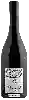
Château Grand BoiseLiberté Chérie Syrah
 Red wine


This wine generally goes well with beef, lamb or mature and hard cheese.
Food and wine pairings with Liberté Chérie Syrah
Pairings that work perfectly with Liberté Chérie Syrah



Original food and wine pairings with Liberté Chérie Syrah

The Liberté Chérie Syrah of Château Grand Boise matches generally quite well with dishes of beef, lamb or spicy food such as recipes of tournedos rossini, thomas's shoulder of lamb or coconut chicken and curry.
Details and technical informations about Château Grand Boise's Liberté Chérie Syrah.
Discover the grape variety: Kernling
Natural mutation of the kerner found in Germany in 1974 by Herrn Ludwig Hochdörffer and put in culture in 1995. Kernling can be found in Germany, Switzerland, England, ... in France it is almost unknown.
Last vintages of this wine
The best vintages of Liberté Chérie Syrah from Château Grand Boise are 2015
Informations about the Château Grand Boise
The Château Grand Boise is one of of the world's greatest estates. It offers 20 wines for sale in the of Vin de France to come and discover on site or to buy online.

The wine region of Vin de France
Vin de France is the most basic level of quality for wines from France. These are generally uncomplicated everyday drinks - most often blends, but perhaps also Varietal wines based on a well-known Grape variety such as Cabernet Sauvignon, Merlot, Chardonnay or Sauvignon Blanc. Wines from France are those that do not meet the criteria stipulated by the Protected Designation of Origin (PDO) or Protected Geographical Indication (PGI) laws (see information on French wine labels). This may be because the vineyards are outside the delimited production areas or because the grape varieties or winemaking techniques used do not conform to the rules of the local appellations.
The word of the wine: Phylloxera
Aphid that came from America and ravaged European vineyards at the end of the 19th century. It lives on the roots of the vine, from which it pumps the sap. The only vines capable of resisting it had to be imported from the United States, and then grafted onto their root system the wood of traditional French grape varieties. Today, grafted vines are always planted.