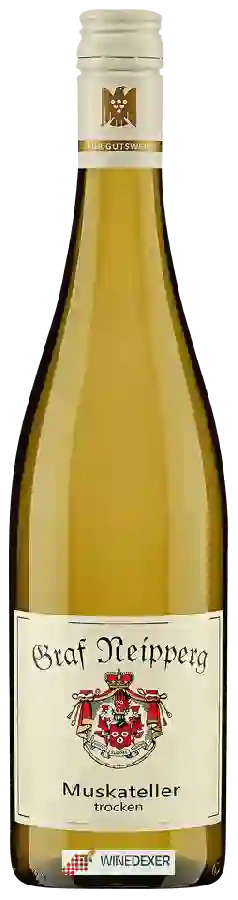
Winery Grafen NeippergMuskateller Trocken
 White wine



This wine generally goes well with
The Muskateller Trocken of the Winery Grafen Neipperg is in the top 70 of wines of Württemberg.

Wine flavors and olphactive analysis

On the nose the Muskateller Trocken of Winery Grafen Neipperg in the region of Württemberg often reveals types of flavors of earth.
Details and technical informations about Winery Grafen Neipperg's Muskateller Trocken.
Discover the grape variety: Gelber Muskateller
Elegant, aromatic muscated whites with a pale golden robe and an airy palate, with intense signature aromas of muscat, white flowers (orange blossom, elderflower), exotic fruits and fresh grape. Also late-harvest and liqueur wines. Grown in Austria (Styria, Wachau, Burgenland), Germany (Baden, Palatinate) and northern Italy (Trentino). Austrian and German aromatic white variety; German-language synonym for Muscat Blanc à Petits Grains.
Last vintages of this wine
The best vintages of Muskateller Trocken from Winery Grafen Neipperg are 2017, 2019, 2015, 2013 and 0.
Informations about the Winery Grafen Neipperg
The Winery Grafen Neipperg is one of of the world's greatest estates. It offers 56 wines for sale in the of Württemberg to come and discover on site or to buy online.

The wine region of Württemberg
Rare predominantly red region in Germany (nearly 70%). Supple, fruity everyday reds: light, crisp Trollinger (Schiava) with red fruits, more structured, spicy, deep Lemberger (Blaufränkisch), generous Schwarzriesling (Pinot Meunier). Riesling king of whites (>2,000 ha), lively and mineral, citrus and green apple. Germany's 4th region (11,500 ha) on the Neckar slopes around Heilbronn and Stuttgart.
The word of the wine: Reassembly
During the vinification process, a "cap" is formed at the top of the vats with the solid parts (skin, pulp, pips, etc.), which contain tannins and colouring elements. Pumping over consists of emptying the vat from the bottom and pouring the juice back to the top, in order to mix the cap and the juice and to favour the exchange and the extraction. This old technique allows a better exchange between the solid parts and the liquid.