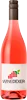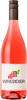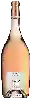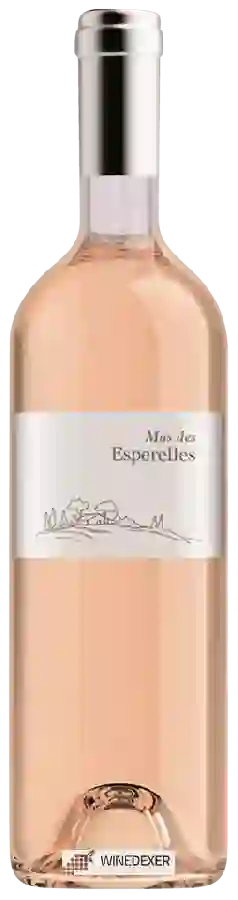
Winery GilardiMas des Esperelles Rosé
 Pink wine
In the mouth this pink wine is a with a nice freshness.
This wine generally goes well with pork, vegetarian or poultry.
Taste structure of the Mas des Esperelles Rosé from the Winery Gilardi
Light | Bold | |
Dry | Sweet | |
Soft | Acidic |
In the mouth the Mas des Esperelles Rosé of Winery Gilardi in the region of Provence is a with a nice freshness.
Food and wine pairings with Mas des Esperelles Rosé
Pairings that work perfectly with Mas des Esperelles Rosé



Original food and wine pairings with Mas des Esperelles Rosé

The Mas des Esperelles Rosé of Winery Gilardi matches generally quite well with dishes of pork, shellfish or vegetarian such as recipes of stuffed mushrooms, cassolettes of scallops or zucchini quiche.
Details and technical informations about Winery Gilardi's Mas des Esperelles Rosé.
Discover the grape variety: Freisa
Most certainly from the Italian Piedmont. It is also found in Argentina. We have noted that this variety has a great resemblance with the nebbiolo, also from the Italian Piedmont. According to genetic analyses published in Switzerland, Freisa is a descendant of Viognier and a half-sister of Rèze.
Informations about the Winery Gilardi
The Winery Gilardi is one of of the world's greatest estates. It offers 22 wines for sale in the of Provence to come and discover on site or to buy online.

The wine region of Provence
Provence is a wine region in the far southeast of France, best known for the quality (and quantity) of its rosé wines and for its Warm, mild Climate. The modernization that is taking place in many of the traditional wine regions of southern France has not yet taken place to the same extent in Provence, but there are Clear signs of change. The region's Grape varieties, in particular, have come under scrutiny in recent decades. Traditional varieties such as Carignan, Barbaroux (Barbarossa from Sardinia) and Calitor are being replaced by more commercially viable varieties such as Grenache, Syrah and even Cabernet Sauvignon.
The word of the wine: Primary (aromas)
Aromas characteristic of each grape variety, essentially fruity and floral.