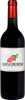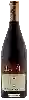
Winery Gebrüder KauerSpätburgunder R
 Red wine
In the mouth this red wine is a with a nice freshness.
This wine generally goes well with poultry, beef or veal.
Taste structure of the Spätburgunder R from the Winery Gebrüder Kauer
Light | Bold | |
Smooth | Tannic | |
Dry | Sweet | |
Soft | Acidic |
In the mouth the Spätburgunder R of Winery Gebrüder Kauer in the region of Nahe is a with a nice freshness.
Food and wine pairings with Spätburgunder R
Pairings that work perfectly with Spätburgunder R



Original food and wine pairings with Spätburgunder R

The Spätburgunder R of Winery Gebrüder Kauer matches generally quite well with dishes of beef, veal or game (deer, venison) such as recipes of pork tongue with tomato sauce and pickles, roast pork with onions and honey or saddle of venison with fresh cream.
Details and technical informations about Winery Gebrüder Kauer's Spätburgunder R.
Discover the grape variety: Gibert
An ancient grape variety found in the Lot department. A.D.N. analyses processed by specific software (U.M.R.-A.G.A.P. Montpellier) have indicated that it is the result of a cross between côt and colombaud. Today, no longer present in the vineyard, it is on the verge of extinction, registered in the Official Catalogue of wine grape varieties, list A1.
Informations about the Winery Gebrüder Kauer
The Winery Gebrüder Kauer is one of of the world's great estates. It offers 20 wines for sale in the of Nahe to come and discover on site or to buy online.

The wine region of Nahe
Nahe is one of the smaller German wine regions, named after the Nahe river which joins the Rhein at Rheinhessen/bingen">Bingen. The viticultural carea here is characterised by dramatic topography with steep slopes and craggy outcrops of metamorphic rock. Like most of the regions on or near the Rhine, its most prestigious wines are made from Riesling. There are around 4,000 hectares (10,000 acres) of Vineyards, spread across seven Grosslagen (wine districts) and over 300 Einzellagen (individual vineyard sites).
The word of the wine: Broker
In the past, he was a sort of fraud control agent who had to watch over the quality of merchant wines (he could carry a sword!). His function has evolved towards expertise (it was the brokers who established the famous 1855 classification in Bordeaux) and today he puts the producer in contact with the merchant.