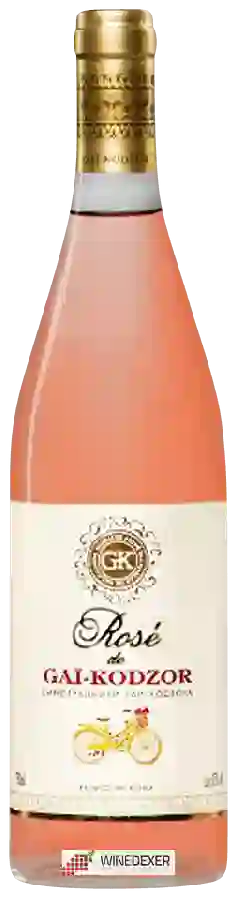
Winery Gaï-KodzorRosé
 Pink wine
of Кубань. Анапа of Кубань of Russia
Pink wine
of Кубань. Анапа of Кубань of Russia

This wine generally goes well with beef, lamb or mature and hard cheese.
The Rosé of the Winery Gaï-Kodzor is in the top 10 of wines of Russia and in the top 5 of wines of Кубань. Анапа.
Wine flavors and olphactive analysis


On the nose the Rosé of Winery Gaï-Kodzor in the region of Кубань often reveals types of flavors of earth, tree fruit or citrus fruit and sometimes also flavors of red fruit.
Food and wine pairings with Rosé
Pairings that work perfectly with Rosé



Original food and wine pairings with Rosé

The Rosé of Winery Gaï-Kodzor matches generally quite well with dishes of beef, lamb or spicy food such as recipes of family potluck, irish stew with beer or chicken pie.
Details and technical informations about Winery Gaï-Kodzor's Rosé.
Discover the grape variety: Posip
A very old grape variety grown in Croatia, on the island of Korcula in southern Dalmatia. It is said to be the result of a natural cross between two Croatian grape varieties, zlatarica blatska and bratkovina. It should not be confused with furmint, which has the synonym posip. Today, Posip can be found throughout Croatia and neighbouring countries... in France it is almost unknown, yet it seems interesting in the production of different/original white wines to discover.
Last vintages of this wine

The best vintages of Rosé from Winery Gaï-Kodzor are 2020, 2019, 2018, 2017 and 0.
Informations about the Winery Gaï-Kodzor
The Winery Gaï-Kodzor is one of of the world's greatest estates. It offers 17 wines for sale in the of Кубань. Анапа to come and discover on site or to buy online.

The wine region of Кубань. Анапа
The wine region of Кубань. Анапа is located in the region of Кубань of Russia. Wineries and vineyards like the Domaine Галицкий и Галицкий (Galitsky and Galitsky) or the Domaine Gaï-Kodzor produce mainly wines red, white and pink. The most planted grape varieties in the region of Кубань.
The wine region of Кубань
The wine region of Кубань of Russia. Wineries and vineyards like the Domaine Fanagoria (Фанагория) or the Domaine Fanagoria (Фанагория) produce mainly wines red, white and sparkling. The most planted grape varieties in the region of Кубань are Cabernet-Sauvignon, Chardonnay and Merlot, they are then used in wines in blends or as a single variety. On the nose of Кубань often reveals types of flavors of oaky, jam or bell pepper and sometimes also flavors of red fruit, blackberry or blueberry.
The word of the wine: Drawing (liqueur de)
In champagne and sparkling wines of traditional method, addition to the wine, at the time of bottling (tirage) of sugars and yeasts dissolved in wine. These components will provoke the second fermentation in the bottle leading to the formation of carbon dioxide bubbles.