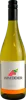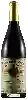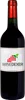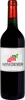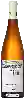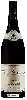
Winery Weinbau G. BildesheimHallgartener Würzgarten Spätburgunder Spätlese Trocken
 Red wine


In the mouth this red wine is a with a nice freshness.
This wine generally goes well with poultry, beef or veal.
Taste structure of the Hallgartener Würzgarten Spätburgunder Spätlese Trocken from the Winery Weinbau G. Bildesheim
Light | Bold | |
Smooth | Tannic | |
Dry | Sweet | |
Soft | Acidic |
In the mouth the Hallgartener Würzgarten Spätburgunder Spätlese Trocken of Winery Weinbau G. Bildesheim in the region of Rheingau is a with a nice freshness.
Wine flavors and olphactive analysis



On the nose the Hallgartener Würzgarten Spätburgunder Spätlese Trocken of Winery Weinbau G. Bildesheim in the region of Rheingau often reveals types of flavors of earth, oak or red fruit.
Food and wine pairings with Hallgartener Würzgarten Spätburgunder Spätlese Trocken
Pairings that work perfectly with Hallgartener Würzgarten Spätburgunder Spätlese Trocken



Original food and wine pairings with Hallgartener Würzgarten Spätburgunder Spätlese Trocken

The Hallgartener Würzgarten Spätburgunder Spätlese Trocken of Winery Weinbau G. Bildesheim matches generally quite well with dishes of beef, veal or game (deer, venison) such as recipes of kig ar farz breton, venison bourguignon or stuffed rabbit in the oven.
Details and technical informations about Winery Weinbau G. Bildesheim's Hallgartener Würzgarten Spätburgunder Spätlese Trocken.
Discover the grape variety: Ravat 51
An interspecific cross obtained by Jean-François Ravat around 1930. Some people give it as parents the 6905 Seibel - or subéreux - and the pinot, to be confirmed however. It can still be found in North America and England, but is practically unknown in France.
Last vintages of this wine
The best vintages of Hallgartener Würzgarten Spätburgunder Spätlese Trocken from Winery Weinbau G. Bildesheim are 0
Informations about the Winery Weinbau G. Bildesheim
The Winery Weinbau G. Bildesheim is one of of the world's greatest estates. It offers 10 wines for sale in the of Rheingau to come and discover on site or to buy online.

The wine region of Rheingau
Rheingau is one of the most important of Germany's 13 Anbaugebiete wine regions. However it is far from the biggest; with 3,076 hectares (7,600 acres) of Vineyard">Vineyards documented in 2012, its output is around one tenth of that from the Pfalz and Rheinhessen regions. Located on the Rhine a 20-minute drive west of Frankfurt, the -gau suffix denotes that it was once a county of the Frankish Empire. The classic Rheingau wine is a DryRiesling with pronounced Acidity and aromas of citrus fruits and smoke-tinged minerality – typically more "masculine" than its equivalent from the Mosel.
The word of the wine: Malic (acid)
An acid that occurs naturally in many wines and is transformed into lactic acid during malolactic fermentation.