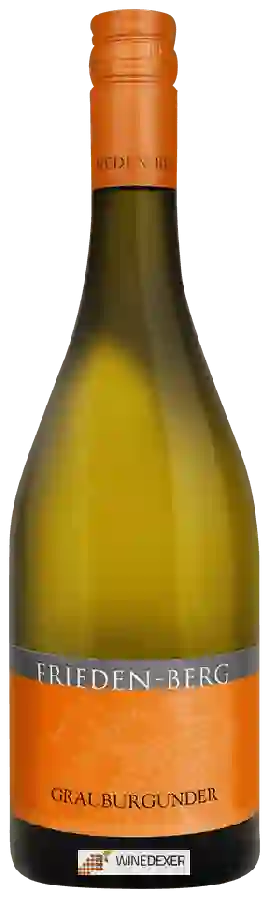
Winery Frieden-BergGrauburgunder
 White wine


In the mouth this white wine is a powerful.
This wine generally goes well with pork, cured meat or mushrooms.

Taste structure of the Grauburgunder from the Winery Frieden-Berg
Light | Bold | |
Dry | Sweet | |
Soft | Acidic |
In the mouth the Grauburgunder of Winery Frieden-Berg in the region of Mosel is a powerful.
Food and wine pairings with Grauburgunder
Pairings that work perfectly with Grauburgunder


Original food and wine pairings with Grauburgunder

The Grauburgunder of Winery Frieden-Berg matches generally quite well with dishes of pork, spicy food or mushrooms such as recipes of breton galette with buckwheat flour, chicken on a bed of summer vegetables or potato cake with serrano ham.
Details and technical informations about Winery Frieden-Berg's Grauburgunder.
Discover the grape variety: Carignan
Intensely coloured and powerful reds with a deep colour, firm tannins and high acidity, on aromas of blackberry, blackcurrant, plum, garrigue, pepper, liquorice and balsamic notes. Old vines (>50 years, often centenary) yield exceptional cuvées. A historical pillar of Languedoc-Roussillon blends (Corbières, Minervois, Fitou, Maury) and star of Catalan Priorat under the name Cariñena. Very late-ripening variety from Aragon, also called Mazuelo in Rioja.
Last vintages of this wine
The best vintages of Grauburgunder from Winery Frieden-Berg are 0
Informations about the Winery Frieden-Berg
The Winery Frieden-Berg is one of of the world's great estates. It offers 28 wines for sale in the of Mosel to come and discover on site or to buy online.

The wine region of Mosel
Kingdom of lively, crystalline Riesling: citrus, green apple, gunflint, tangy tension and signature slate minerality. From light, fruity Kabinett to off-dry Spätlese, up to sweet Auslese and Trockenbeerenauslese of rare finesse. Some supple Müller-Thurgau and lively Elbling. Steeply sloped vineyards (up to 65% at the Bremmer Calmont) on blue and grey slate, 5,400 ha of Riesling (61.
The word of the wine: De-vatting
Separation of the fermented juice from all solid particles (skin, pips, deposit of lees) by transferring it to a second tank.




