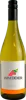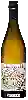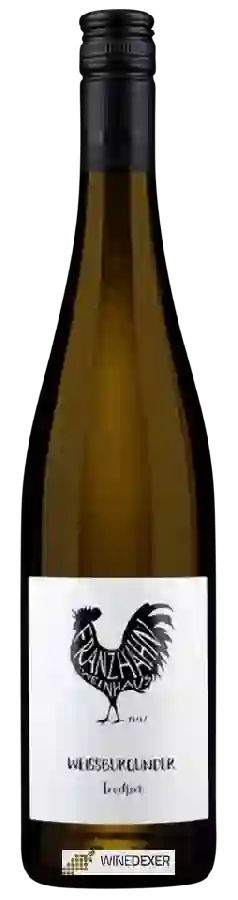
Winery Franz HahnWeissburgunder Trocken
 White wine



In the mouth this white wine is a with a nice freshness.
This wine generally goes well with rich fish (salmon, tuna etc), shellfish or mild and soft cheese.

Taste structure of the Weissburgunder Trocken from the Winery Franz Hahn
Light | Bold | |
Dry | Sweet | |
Soft | Acidic |
In the mouth the Weissburgunder Trocken of Winery Franz Hahn in the region of Pfalz is a with a nice freshness.
Food and wine pairings with Weissburgunder Trocken
Pairings that work perfectly with Weissburgunder Trocken



Original food and wine pairings with Weissburgunder Trocken

The Weissburgunder Trocken of Winery Franz Hahn matches generally quite well with dishes of rich fish (salmon, tuna etc), shellfish or mild and soft cheese such as recipes of salmon steak on a bed of leeks, lobster tail armorican style or lasagna bolognese.
Details and technical informations about Winery Franz Hahn's Weissburgunder Trocken.
Discover the grape variety: Meunier
Early, supple and fruity reds with a clear ruby colour, smooth tannins, an airy palate with preserved acidity, and aromas of red fruits (cherry, strawberry), white flowers and brioche. A star in Champagne AOC blends, bringing freshness, fruitiness and early accessibility; it represents about a third of the Champagne vineyard. Official synonym of Pinot Meunier, a native French black variety from Champagne, a felty-leafed mutation of Pinot Noir.
Last vintages of this wine
The best vintages of Weissburgunder Trocken from Winery Franz Hahn are 2019, 0, 2018, 2015
Informations about the Winery Franz Hahn
The Winery Franz Hahn is one of of the world's greatest estates. It offers 49 wines for sale in the of Pfalz to come and discover on site or to buy online.

The wine region of Pfalz
Fleshy, dry, fruity Riesling is the region's signature: yellow peach, apricot, ripe citrus, lovely mineral tension. Germany's largest red-wine area (40%), with silky Spätburgunder showing red fruit and spice, darker structured Dornfelder, supple Portugieser. Some rounded Pinot Blanc and Pinot Gris. A 23,640 ha vineyard along the Haardt, among Germany's warmest (>2,000 h of sun).
The word of the wine: Shipping (liquor)
In champagne and wines made according to the traditional method, wine is added before corking to fill the void in the bottle created by disgorging. This added wine is often sweetened by sugar incorporated in variable proportions according to the style of wine sought (see dosage). Syn.: liqueur de dosage.