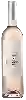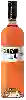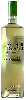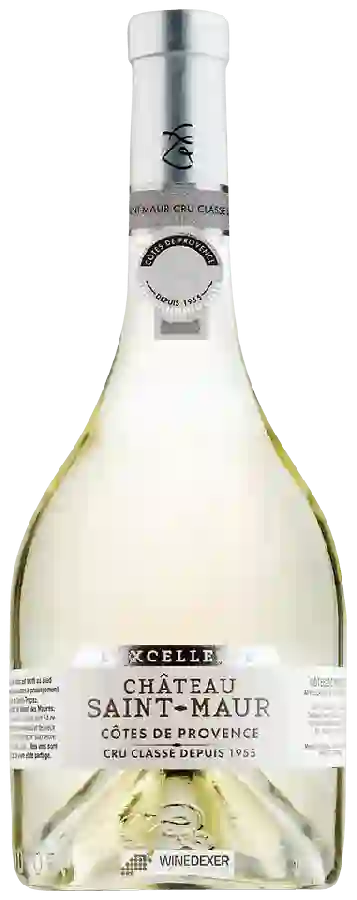
Château Saint-MaurL'Excellence Côtes de Provence Blanc
 White wine


This wine generally goes well with
The L'Excellence Côtes de Provence Blanc of the Château Saint-Maur is in the top 50 of wines of Côtes de Provence.

Wine flavors and olphactive analysis




On the nose the L'Excellence Côtes de Provence Blanc of Château Saint-Maur in the region of Provence often reveals types of flavors of oil, earth or microbio and sometimes also flavors of tree fruit, citrus fruit.
Details and technical informations about Château Saint-Maur's L'Excellence Côtes de Provence Blanc.
Discover the grape variety: Muscat Bailey A
Supple, fruity reds with a moderate ruby robe, silky tannins and a direct palate, with signature Muscat aromas (fresh grape, rose), red fruits (cherry, strawberry), candy and hybrid herbal notes. A simple, early-ripening profile. Widely grown in Japan (Yamanashi, Nagano), it is the emblem of modern Japanese reds. Black hybrid grape created in 1927 by Zenbei Kawakami, a Bailey × Muscat Hamburg cross.
Last vintages of this wine

The best vintages of L'Excellence Côtes de Provence Blanc from Château Saint-Maur are 2015, 2017, 2014, 2016 and 2012.
Informations about the Château Saint-Maur
The Château Saint-Maur is one of of the world's greatest estates. It offers 17 wines for sale in the of Côtes de Provence to come and discover on site or to buy online.

The wine region of Côtes de Provence
World reference for pale, elegant rosé: salmon to onion-skin hue, notes of strawberry, pink grapefruit, white peach and flowers, fresh, dry, mineral palate, taut finish. 90% of output, the Provençal signature. Grenache, Cinsault, Syrah and native Tibouren in the blend. A few fleshy Mediterranean reds (Mourvèdre, Syrah) and saline Vermentino whites.
The wine region of Provence
World capital of dry, refined rosé (~90% of production). Pale rose-petal colour, delicate nose of fresh red fruits (strawberry, raspberry, redcurrant), citrus (pink grapefruit), white flowers and a mineral touch, taut and thirst-quenching palate — the Mediterranean aperitif par excellence. Blends of Grenache, Cinsault, Syrah, Tibouren and Mourvèdre. Fleshy Bandol reds from Mourvèdre (leather, garrigue, age-worthy), straight Cassis whites.
The word of the wine: Bouchy
See cabernet franc.