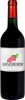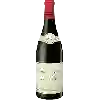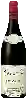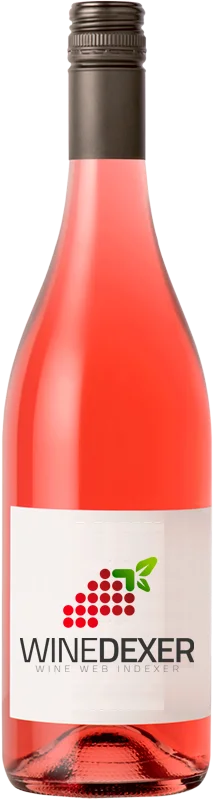
Winery Notre Dame de CousignacParcelle Nord Côtes du Vivarais Rosé
 Pink wine
This wine generally goes well with pork, poultry or rich fish (salmon, tuna etc).
Food and wine pairings with Parcelle Nord Côtes du Vivarais Rosé
Pairings that work perfectly with Parcelle Nord Côtes du Vivarais Rosé



Original food and wine pairings with Parcelle Nord Côtes du Vivarais Rosé

The Parcelle Nord Côtes du Vivarais Rosé of Winery Notre Dame de Cousignac matches generally quite well with dishes of pork, rich fish (salmon, tuna etc) or shellfish such as recipes of rabbit in white wine (casserole), skate with vinegar and capers or chipirons / squids with tomato (basque country).
Details and technical informations about Winery Notre Dame de Cousignac's Parcelle Nord Côtes du Vivarais Rosé.
Discover the grape variety: Fogoneu
This grape variety is native to the Balearic Islands (Spain), more precisely to the island of Mayorque, and has been cultivated for a very long time. It is believed to be the result of a natural cross between the escursac or excursach and the mansés (or mancès) de capdell. DNA analyses show that the Fogoneu Mallorqui is not related to any other variety and that the Fogoneu is a direct descendant of the Callet. It can be found in Argentina, Spain and Italy, but is little known in France, although it should be interesting for the production of original rosé wines that are always very pleasant to drink.
Informations about the Winery Notre Dame de Cousignac
The Winery Notre Dame de Cousignac is one of of the world's great estates. It offers 34 wines for sale in the of Côtes du Vivarais to come and discover on site or to buy online.

The wine region of Côtes du Vivarais
The wine region of Côtes du Vivarais is located in the region of Rhône méridional of Rhone Valley of France. Wineries and vineyards like the Domaine Gallety or the Domaine Gallety produce mainly wines red, white and pink. The most planted grape varieties in the region of Côtes du Vivarais are Mourvèdre, Marsanne and Chardonnay, they are then used in wines in blends or as a single variety. On the nose of Côtes du Vivarais often reveals types of flavors of oak, earth or blackberry and sometimes also flavors of floral, black fruit or spices.
The wine region of Rhone Valley
The Rhone Valley is a key wine-producing region in Southeastern France. It follows the North-south course of the Rhône for nearly 240 km, from Lyon to the Rhône delta (Bouches-du-Rhône), near the Mediterranean coast. The Length of the valley means that Rhône wines are the product of a wide variety of soil types and mesoclimates. The viticultural areas of the region cover such a distance that there is a widely accepted division between its northern and southern parts.
The word of the wine: Muscat blanc à petits grains
A white grape variety cultivated since antiquity on the shores of the Mediterranean, it is considered the noblest of the muscats. It is mainly used to make sweet wines, often from mutage. In France, it is the sole variety used in many natural sweet wines: muscat-de-frontignan, muscat-de-mireval, muscat-de-lunel, muscat-de-saint-jean-de-minervois, muscat-de-beaumes-de-venise, muscat-du-cap-corse. Combined with Muscat d'Alexandrie, it gives Muscat-de-Rivesaltes. It is also used to make sparkling white wines (clairette-de-die; moscato d'asti and asti spumante in Italy) and dry wines (alsace-muscat). Powerfully aromatic and complex, its wines evoke fresh grapes, roses, exotic fruits, citrus fruits and spices.