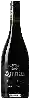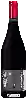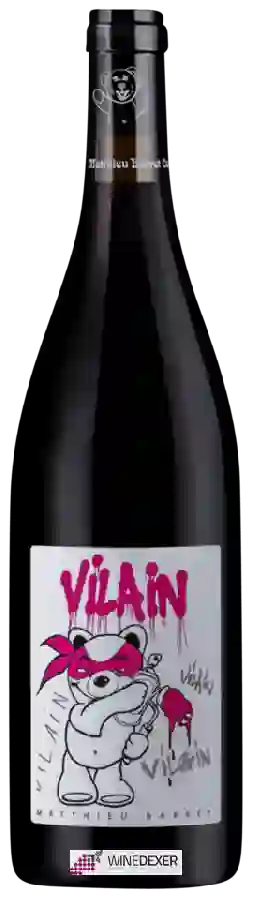
Domaine du Coulet - Matthieu BarretVilain
 Red wine
This wine generally goes well with beef, lamb or mature and hard cheese.
The Vilain of the Domaine du Coulet - Matthieu Barret is in the top 60 of wines of Vin de France.
Food and wine pairings with Vilain
Pairings that work perfectly with Vilain



Original food and wine pairings with Vilain

The Vilain of Domaine du Coulet - Matthieu Barret matches generally quite well with dishes such as recipes .
Details and technical informations about Domaine du Coulet - Matthieu Barret's Vilain.
Discover the grape variety: Fantasy seedless
Cross between B36-27 and P64-18 obtained in the United States (California) by David Wilder Ramming and Ronald Tarailo and where it is cultivated since 1994. The slightly foxed taste of its flesh makes us think that there was an intervention of a direct producer hybrid itself with a foxed taste.
Last vintages of this wine



The best vintages of Vilain from Domaine du Coulet - Matthieu Barret are 2020, 2019, 0, 2021
Informations about the Domaine du Coulet - Matthieu Barret
The Domaine du Coulet - Matthieu Barret is one of of the world's greatest estates. It offers 32 wines for sale in the of Vin de France to come and discover on site or to buy online.

The wine region of Vin de France
Vin de France is the most basic level of quality for wines from France. These are generally uncomplicated everyday drinks - most often blends, but perhaps also Varietal wines based on a well-known Grape variety such as Cabernet Sauvignon, Merlot, Chardonnay or Sauvignon Blanc. Wines from France are those that do not meet the criteria stipulated by the Protected Designation of Origin (PDO) or Protected Geographical Indication (PGI) laws (see information on French wine labels). This may be because the vineyards are outside the delimited production areas or because the grape varieties or winemaking techniques used do not conform to the rules of the local appellations.
The word of the wine: Size (champagne)
Juices that flow from the press after the cuvée, at the second pressing. Less fine, often more vegetal, it is mainly used to make the first price champagnes.