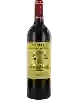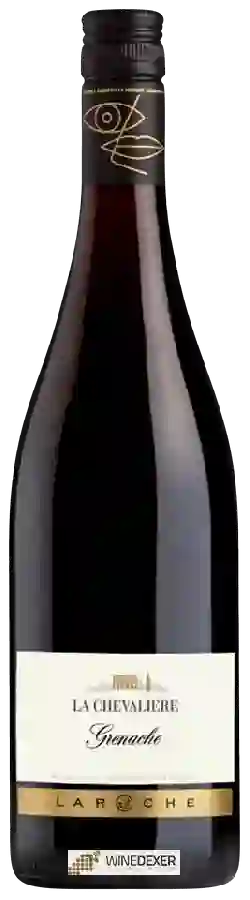
Winery La ChevalièreGrenache
 Red wine


In the mouth this red wine is a powerful.
This wine generally goes well with poultry, beef or lamb.

Taste structure of the Grenache from the Winery La Chevalière
Light | Bold | |
Smooth | Tannic | |
Dry | Sweet | |
Soft | Acidic |
In the mouth the Grenache of Winery La Chevalière in the region of Pays d'Oc is a powerful.
Food and wine pairings with Grenache
Pairings that work perfectly with Grenache



Original food and wine pairings with Grenache

The Grenache of Winery La Chevalière matches generally quite well with dishes of beef, pasta or lamb such as recipes of enchiladas franchouillards, soy and shrimp noodles or lamb tagine with honey and dried fruits.
Details and technical informations about Winery La Chevalière's Grenache.
Discover the grape variety: Charbono
Deep-coloured, fruity reds with a sustained purple colour, firm yet rounded tannins and a dense, fresh palate; signature aromas of black fruits (blackberry, blackcurrant), red fruits (cherry), spices and herbal notes. Grown in California as Charbono and in Argentina as Bonarda for characterful reds. Indigenous Italian black grape from Piedmont (Douce Noir), identical to Argentina's Bonarda by DNA analysis.
Last vintages of this wine

The best vintages of Grenache from Winery La Chevalière are 2013, 2012, 2016, 2015 and 2011.
Informations about the Winery La Chevalière
The Winery La Chevalière is one of of the world's great estates. It offers 20 wines for sale in the of Pays d'Oc to come and discover on site or to buy online.

The wine region of Pays d'Oc
The single-grape IGP par excellence: modern, accessible, frank and fruity wines, the popular signature of the Midi. Spicy Syrah reds (pepper, blackberry), round Merlot, structured Cabernet, generous Grenache, supple Cinsault. Crisp, tangy rosés. Opulent Chardonnay whites, lively Sauvignon, floral, apricoty Viognier.
The word of the wine: Vinification of sweet wines
Moelleux and liquoreux wines are characterized by the presence of residual sugars (natural sugar of the grape), not transformed into alcohol under the effect of yeasts. The fermentation is stopped by cold and by the addition of sulphur dioxide (sulphur).