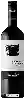
Winery Jean Saint HonoreBourgogne Santenay
 Red wine



In the mouth this red wine is a powerful with a nice freshness.
This wine generally goes well with poultry, beef or veal.
Taste structure of the Bourgogne Santenay from the Winery Jean Saint Honore
Light | Bold | |
Smooth | Tannic | |
Dry | Sweet | |
Soft | Acidic |
In the mouth the Bourgogne Santenay of Winery Jean Saint Honore in the region of Burgundy is a powerful with a nice freshness.
Wine flavors and olphactive analysis

Food and wine pairings with Bourgogne Santenay
Pairings that work perfectly with Bourgogne Santenay



Original food and wine pairings with Bourgogne Santenay

The Bourgogne Santenay of Winery Jean Saint Honore matches generally quite well with dishes of beef, veal or game (deer, venison) such as recipes of fast and, duck with orange or duck legs confit.
Details and technical informations about Winery Jean Saint Honore's Bourgogne Santenay.
Discover the grape variety: Galotta
Intraspecific cross between ancellotta and gamay à jus blanc obtained in 1981 at the Agroscope Research Station in Pully (Switzerland).
Informations about the Winery Jean Saint Honore
The Winery Jean Saint Honore is one of of the world's greatest estates. It offers 5 wines for sale in the of Santenay to come and discover on site or to buy online.

The wine region of Santenay
The wine region of Santenay is located in the region of Côte de Beaune of Burgundy of France. Wineries and vineyards like the Domaine Antoine Olivier or the Domaine René Lequin-Colin produce mainly wines red and white. The most planted grape varieties in the region of Santenay are Pinot noir, Chardonnay and Muscadelle, they are then used in wines in blends or as a single variety. On the nose of Santenay often reveals types of flavors of red fruit, stone fruit or violet and sometimes also flavors of apricot, dried fruit or almonds.
The wine region of Burgundy
Bourgogne is the catch-all regional appellation title of the Burgundy wine region in eastern France ("Bourgogne" is the French name for Burgundy). Burgundy has a Complex and comprehensive appellation system; counting Premier Cru and Grand Cru titles, the region has over 700 appellation titles for its wines. Thus, Burgundy wines often come from one Vineyard (or several separate vineyards) without an appellation title specific to the region, Village or even vineyard. A standard Burgundy wine may be made from grapes grown in one or more of Burgundy's 300 communes.
The word of the wine: Concentrate
Said of a wine that is rich in all its components (sugars in sweet wines, tannins in red wines, aromatic compounds) and that leaves an impression of density, intensity and depth.