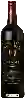
Winery Michel PionChâteau Anniche Bordeaux Blanc
 White wine



In the mouth this white wine is a powerful.
This wine generally goes well with pork, vegetarian or poultry.
Taste structure of the Château Anniche Bordeaux Blanc from the Winery Michel Pion
Light | Bold | |
Dry | Sweet | |
Soft | Acidic |
In the mouth the Château Anniche Bordeaux Blanc of Winery Michel Pion in the region of Bordeaux is a powerful.


Food and wine pairings with Château Anniche Bordeaux Blanc
Pairings that work perfectly with Château Anniche Bordeaux Blanc



Original food and wine pairings with Château Anniche Bordeaux Blanc


The Château Anniche Bordeaux Blanc of Winery Michel Pion matches generally quite well with dishes of pork, vegetarian or poultry such as recipes of endives au gratin without béchamel sauce, nanie's diced ham quiche or violet omelette.
Details and technical informations about Winery Michel Pion's Château Anniche Bordeaux Blanc.
Discover the grape variety: Traminette
Interspecific crossing between 23416 Joannès Seyve (4.825 Bertille Seyve x 7053 Seibel) and the gewurztraminer obtained in 1965 by Herb Barrett of the University of Illinois (United States) and selected by the Experimental Station of Cornell University in Geneva (United States) In this country, it can be found in many wine-producing regions, as well as in Canada and Germany, but it is virtually unknown in France.
Last vintages of this wine
The best vintages of Château Anniche Bordeaux Blanc from Winery Michel Pion are 2017, 2012, 2015, 2014 and 2016.
Informations about the Winery Michel Pion
The Winery Michel Pion is one of of the world's greatest estates. It offers 14 wines for sale in the of Bordeaux to come and discover on site or to buy online.

The wine region of Bordeaux
Bordeaux, in southwestern France, is one of the most famous, prestigious and prolific wine regions in the world. The majority of Bordeaux wines (nearly 90% of the production Volume) are the Dry, medium and Full-bodied red Bordeaux blends for which it is famous. The finest (and most expensive) are the wines of the great châteaux of Haut-Médoc and the right bank appellations of Saint-Émilion and Pomerol. The former focuses (at the highest level) on Cabernet Sauvignon, the latter on Merlot.
The word of the wine: Press (wine)
In red winemaking, wine made from the marcs by pressing after devatting. See goutte (wine of).