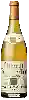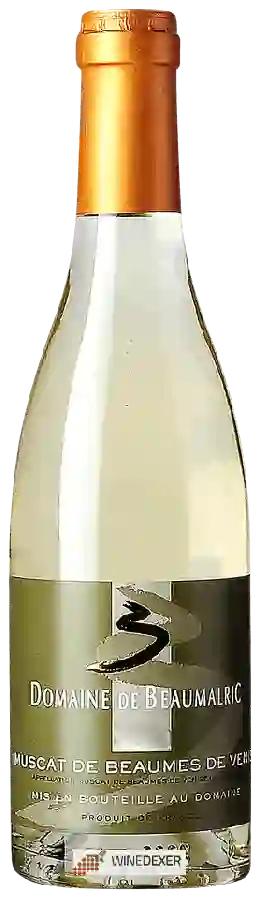
Domaine de BeaumalricMuscat de Beaumes de Venise Blanc
 Natural sweet wine


This wine generally goes well with
Wine flavors and olphactive analysis

Details and technical informations about Domaine de Beaumalric's Muscat de Beaumes de Venise Blanc.
Discover the grape variety: Mancin
Mancin noir is a grape variety that originated in France (Bordeaux). It produces a variety of grape specially used for wine making. It is rare to find this grape to eat on our tables. Mancin noir can be found cultivated in these vineyards: South West, Cognac, Bordeaux, Provence & Corsica, Rhone Valley.
Informations about the Domaine de Beaumalric
The Domaine de Beaumalric is one of of the world's greatest estates. It offers 9 wines for sale in the of Muscat de Beaumes de Venise to come and discover on site or to buy online.

The wine region of Muscat de Beaumes de Venise
The wine region of Muscat de Beaumes de Venise is located in the region of Beaumes-de-Venise of Rhone Valley of France. Wineries and vineyards like the Domaine Bernardins or the Domaine Alain Ignace produce mainly wines natural sweet, white and sweet. The most planted grape varieties in the region of Muscat de Beaumes de Venise are Chardonnay, Mourvèdre and Marsanne, they are then used in wines in blends or as a single variety. On the nose of Muscat de Beaumes de Venise often reveals types of flavors of pineapple, cheese or apples and sometimes also flavors of white peach, raisin or mint.
The wine region of Rhone Valley
The Rhone Valley is a key wine-producing region in Southeastern France. It follows the North-south course of the Rhône for nearly 240 km, from Lyon to the Rhône delta (Bouches-du-Rhône), near the Mediterranean coast. The Length of the valley means that Rhône wines are the product of a wide variety of soil types and mesoclimates. The viticultural areas of the region cover such a distance that there is a widely accepted division between its northern and southern parts.
The word of the wine: Bleeding
Old practice for red wines. As soon as the vat is filled with grapes, the tap is opened. A sweet but clear juice escapes from the vat (it can also be used to make rosé). The colour and density of the juice is enhanced, but it should not be overdone. Rarely more than 10% of the volume of a vat, otherwise you risk losing fruit and bringing in bitterness.