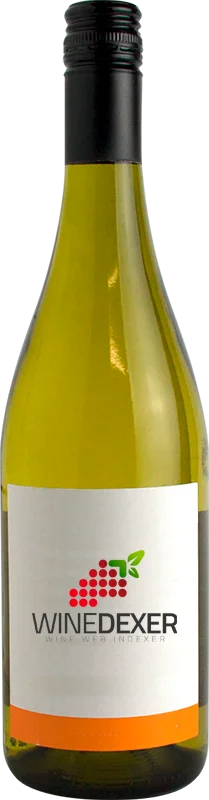
Winery Baron de LestacBordeaux Moelleux
 Sweet wine



This wine generally goes well with vegetarian, poultry or rich fish (salmon, tuna etc).
Food and wine pairings with Bordeaux Moelleux
Pairings that work perfectly with Bordeaux Moelleux



Original food and wine pairings with Bordeaux Moelleux


The Bordeaux Moelleux of Winery Baron de Lestac matches generally quite well with dishes of rich fish (salmon, tuna etc), shellfish or sweet desserts such as recipes of gratin dauphinois with smoked salmon, cuttlefish rust from my grandmother in sète or very simple muffins.
Details and technical informations about Winery Baron de Lestac's Bordeaux Moelleux.
Discover the grape variety: Muscat rge de Madère
A very old variety of table grape that is now almost extinct. It can still be found in Italy, Portugal, Romania, Moldavia, ... in France, it can only be found among amateur gardeners and/or collectors. It is given as originating from Portugal, others from Romania. D.N.A. analyses carried out in 2007 allow us to confirm that it is indeed a natural intraspecific cross between the muscat à petits grains blancs and the sciaccarello or mammolo nero.
Informations about the Winery Baron de Lestac
The Winery Baron de Lestac is one of of the world's greatest estates. It offers 14 wines for sale in the of Bordeaux to come and discover on site or to buy online.

The wine region of Bordeaux
Bordeaux, in southwestern France, is one of the most famous, prestigious and prolific wine regions in the world. The majority of Bordeaux wines (nearly 90% of the production Volume) are the Dry, medium and Full-bodied red Bordeaux blends for which it is famous. The finest (and most expensive) are the wines of the great châteaux of Haut-Médoc and the right bank appellations of Saint-Émilion and Pomerol. The former focuses (at the highest level) on Cabernet Sauvignon, the latter on Merlot.
The word of the wine: Performance
Quantity of grapes harvested per hectare. In AOC, the average yield is limited on the proposal of the appellation syndicate, validated by the Inao. The use of high-performance plant material (especially clones) and better control of vine diseases have increased yields. This is not without consequences on the quality of the wines (dilution) and on the state of the market (too much wine). We must not over-simplify: low yields are not synonymous with quality, and it is often in years with generous harvests that we find the greatest vintages (1982 and 1986 in Bordeaux, 1996 in Champagne, 1990 and 2005 in Burgundy...).