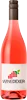
Winery FontesoleCuvée D'Excellence Prieuré Saint-Hippolyte Languedoc Rosé
 Pink wine


In the mouth this pink wine is a with a nice freshness.
This wine generally goes well with vegetarian, appetizers and snacks or lean fish.
Taste structure of the Cuvée D'Excellence Prieuré Saint-Hippolyte Languedoc Rosé from the Winery Fontesole
Light | Bold | |
Dry | Sweet | |
Soft | Acidic |
In the mouth the Cuvée D'Excellence Prieuré Saint-Hippolyte Languedoc Rosé of Winery Fontesole in the region of Languedoc-Roussillon is a with a nice freshness.
Food and wine pairings with Cuvée D'Excellence Prieuré Saint-Hippolyte Languedoc Rosé
Pairings that work perfectly with Cuvée D'Excellence Prieuré Saint-Hippolyte Languedoc Rosé



Original food and wine pairings with Cuvée D'Excellence Prieuré Saint-Hippolyte Languedoc Rosé


The Cuvée D'Excellence Prieuré Saint-Hippolyte Languedoc Rosé of Winery Fontesole matches generally quite well with dishes of pasta, vegetarian or appetizers and snacks such as recipes of spaghetti with garlic, quiche with leeks and fresh salmon from flo or baked salmon steaks.
Details and technical informations about Winery Fontesole's Cuvée D'Excellence Prieuré Saint-Hippolyte Languedoc Rosé.
Discover the grape variety: Saint Pépin
Direct producer hybrid resulting from an interspecific cross between 114 E.S. (78 Minnesota x rosette or 1000 Seibel) and white seyval or 5-276 Seyve-Villard) obtained in 1971 in Osceala (United States Wisconsin) by Elmer Swenson (1913-2004). It can be found in North America, Midwest region, in Canada (Quebec, ...), in Eastern countries such as Russia, ... in France it is almost unknown.
Informations about the Winery Fontesole
The Winery Fontesole is one of of the world's great estates. It offers 49 wines for sale in the of Languedoc-Roussillon to come and discover on site or to buy online.

The wine region of Languedoc-Roussillon
Languedoc (formerly Coteaux du Languedoc) is a key appellation used in the Languedoc-Roussillon wine region of southern France. It covers Dry table wines of all three colors (red, white and rosé) from the entire region, but leaves Sweet and Sparkling wines to other more specialized appellations. About 75% of all Languedoc wines are red, with the remaining 25% split roughly down the middle between whites and rosés. The appellation covers most of the Languedoc region and almost a third of all the vineyards in France.
The word of the wine: Old vines
There are no specific regulations governing the term "vieilles vignes". After 20 to 25 years, the yields stabilize and tend to decrease, the vines are deeply rooted, and the grapes that come from them give richer, more concentrated, more sappy wines, expressing with more nuance the characteristics of their terroir. It is possible to find plots of vines that claim to be a century old.