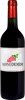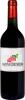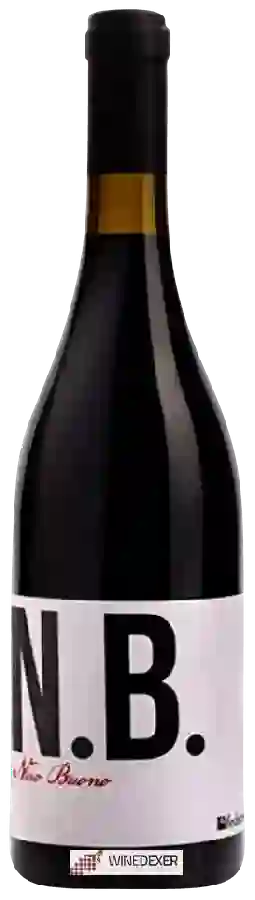
Winery FedericiNero Buono
 Red wine



In the mouth this red wine is a powerful.
This wine generally goes well with poultry, beef or veal.

Taste structure of the Nero Buono from the Winery Federici
Light | Bold | |
Smooth | Tannic | |
Dry | Sweet | |
Soft | Acidic |
In the mouth the Nero Buono of Winery Federici in the region of Lazio is a powerful.
Food and wine pairings with Nero Buono
Pairings that work perfectly with Nero Buono



Original food and wine pairings with Nero Buono

The Nero Buono of Winery Federici matches generally quite well with dishes of beef, pasta or veal such as recipes of sloth pork loin, pasta "carbonara" à la française or aiguillette of duck with honey.
Details and technical informations about Winery Federici's Nero Buono.
Discover the grape variety: Perlette
Seedless table grape with long clusters and golden berries, thin skin and crisp flesh, sweet fresh taste. Early-ripening and productive. Grown in California, Mexico, Argentina and Chile for export markets, valued for its attractive appearance and excellent shelf life. White seedless American variety obtained in 1936 in California, widely distributed in supermarkets.
Last vintages of this wine
The best vintages of Nero Buono from Winery Federici are 2018, 0, 2017
Informations about the Winery Federici
The Winery Federici is one of of the world's great estates. It offers 44 wines for sale in the of Lazio to come and discover on site or to buy online.

The wine region of Lazio
Two-millennia Roman vineyard, predominantly white on the volcanic soils of the Castelli Romani. Frascati DOC as figurehead: fresh, accessible whites based on Malvasia and Trebbiano, notes of green apple, white flowers and almond, slightly bitter finish. Also Bellone and Grechetto. Emblematic red: Cesanese del Piglio DOCG, fleshy with notes of ripe cherry, dry herbs and spice, round tannins.
The word of the wine: Aging on lees
Maturing on the lees enhances the stability, aromatic complexity and texture of white wines, which gain in body and volume. This phenomenon is induced by autolysis, the process of self-degradation of the lees.