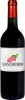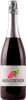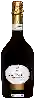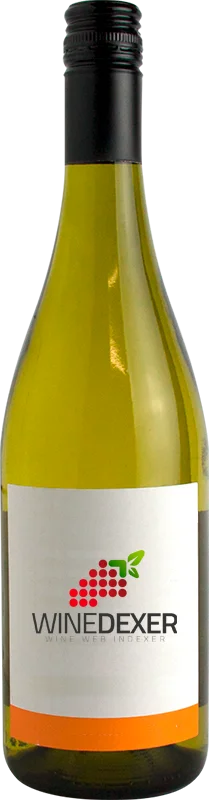
Winery Fattoria ParadisoVigna del Viale Albana Dolce
 Sweet wine


This wine generally goes well with
Details and technical informations about Winery Fattoria Paradiso's Vigna del Viale Albana Dolce.
Discover the grape variety: Pinella blanca
A very old grape variety that has been cultivated for a very long time in Italy - where it originated - and that can still be found today in the Veneto region. It is also known in Slovenia and Bulgaria, but is virtually unknown in France. According to genetic analysis, it is related to the white gouais, which it resembles somewhat. There is a Pinella nera, but it is not clear whether it is the black form.
Last vintages of this wine
The best vintages of Vigna del Viale Albana Dolce from Winery Fattoria Paradiso are 2018, 0
Informations about the Winery Fattoria Paradiso
The Winery Fattoria Paradiso is one of of the world's great estates. It offers 46 wines for sale in the of Emilia-Romagna to come and discover on site or to buy online.

The wine region of Emilia-Romagna
Romagna/emilia">Emilia-Romagna is a Rich and fertile region in Northern Italy, and one of the country's most prolific wine-producing regions, with over 58,000 hectares (143,320 acres) of vines in 2010. It is 240 kilometers (150 miles) wide and stretches across almost the entire northern Italian peninsula, sandwiched between Tuscany to the South, Lombardy and Veneto to the north and the Adriatic Sea to the east. Nine miles of Liguria is all that separates Emilia-Romagna from the Ligurian Sea, and its uniqueness as the only Italian region with both an east and west coast. Emilia-Romagna's wine-growing heritage dates back to the seventh century BC, making it one of the oldest wine-growing regions in Italy.
The word of the wine: Maceration
Prolonged contact and exchange between the juice and the grape solids, especially the skin. Not to be confused with the time of fermentation, which follows maceration. The juice becomes loaded with colouring matter and tannins, and acquires aromas. For a rosé, the maceration is short so that the colour does not "rise" too much. For white wines too, a "pellicular maceration" can be practised, which allows the wine to acquire more fat.