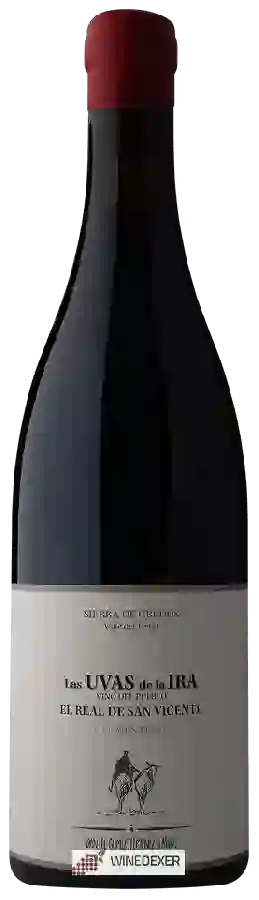
Winery Jiménez-LandiLas Uvas de la Ira
 Red wine


In the mouth this red wine is a powerful with a nice freshness.
This wine generally goes well with poultry, beef or game (deer, venison).
The Las Uvas de la Ira of the Winery Jiménez-Landi is in the top 5 of wines of Méntrida.

Taste structure of the Las Uvas de la Ira from the Winery Jiménez-Landi
Light | Bold | |
Smooth | Tannic | |
Dry | Sweet | |
Soft | Acidic |
In the mouth the Las Uvas de la Ira of Winery Jiménez-Landi in the region of Castille is a powerful with a nice freshness.
Wine flavors and olphactive analysis






On the nose the Las Uvas de la Ira of Winery Jiménez-Landi in the region of Castille often reveals types of flavors of cream, cherry or oaky and sometimes also flavors of smoke, earthy or blackberry.
Food and wine pairings with Las Uvas de la Ira
Pairings that work perfectly with Las Uvas de la Ira



Original food and wine pairings with Las Uvas de la Ira


The Las Uvas de la Ira of Winery Jiménez-Landi matches generally quite well with dishes of beef, lamb or poultry such as recipes of beef fillet in a crust, mouse of lamb with thyme or ham and cheese omelette.
Details and technical informations about Winery Jiménez-Landi's Las Uvas de la Ira.
Discover the grape variety: Garnacha
Generous, warm reds with an evolving ruby robe, smooth tannins and an ample palate, showing intense aromas of ripe red fruits (cherry, candied raspberry), garrigue, dry herbs, spices, liquorice and sun-drenched notes. Also in luscious rosés and sweet wines (Banyuls). Absolute star of Priorat DOQ, pillar of Rioja DOCa, Garnacha de Aragón, Campo de Borja DO, Calatayud DO and Châteauneuf-du-Pape AOC. Aragonese autochthonous variety, one of the most planted worldwide.
Last vintages of this wine

The best vintages of Las Uvas de la Ira from Winery Jiménez-Landi are 2022, 2018, 2023, 2021 and 2020.
Informations about the Winery Jiménez-Landi
The Winery Jiménez-Landi is one of of the world's greatest estates. It offers 29 wines for sale in the of Méntrida to come and discover on site or to buy online.

The wine region of Méntrida
DO in northwest Toledo (Castilla-La Mancha), extreme continental climate, granitic soils, centenarian vines. Garnacha Tinta is the signature red king (>80%) in qualitative renaissance: finesse and mineral precision with red cherry, raspberry, dried flowers, herbs and pepper, silky tannins and airy transparency — compared to Pinot Noir. Tempranillo and Syrah as complements. Floral Albillo as white.
The wine region of Castille
Cradle of great Castilian reds, high-altitude plateaus (450-1000 m) along the Duero. Tempranillo king (aka Tinta de Toro, Tinto Fino): powerful, concentrated, structured reds with notes of black cherry, plum, leather, tobacco and spice, firm tannins from altitude and cool nights. Stars: Ribera del Duero (Vega Sicilia, Pingus), fleshy Toro, Bierzo (floral, mineral Mencía). Lively, herbaceous Verdejo whites from Rueda.
The word of the wine: Breeding
It can last for several years. The bottles are stacked in the cellars and waited for the light and heat. The yeasts gradually give the wine compounds that enrich it. A long maturation is a guarantee of quality.