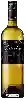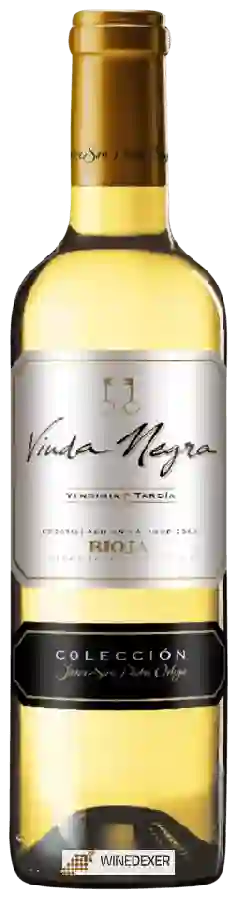
Bodegas Javier San Pedro OrtegaViuda Negra Vendimia Tardía
 Sweet wine


This wine generally goes well with appetizers and snacks, lean fish or shellfish.

Wine flavors and olphactive analysis



On the nose the Viuda Negra Vendimia Tardía of Bodegas Javier San Pedro Ortega in the region of Rioja often reveals types of flavors of earth, oak or tree fruit.
Food and wine pairings with Viuda Negra Vendimia Tardía
Pairings that work perfectly with Viuda Negra Vendimia Tardía



Original food and wine pairings with Viuda Negra Vendimia Tardía

The Viuda Negra Vendimia Tardía of Bodegas Javier San Pedro Ortega matches generally quite well with dishes of shellfish, appetizers and snacks or lean fish such as recipes of parillade of fish and seafood, seed crackers or fillet of saithe with cream and mustard.
Details and technical informations about Bodegas Javier San Pedro Ortega's Viuda Negra Vendimia Tardía.
Discover the grape variety: Balcic
Supple, fruity whites to drink young with a pale golden robe, an airy, low-alcohol palate with moderate acidity, and signature aromas of white-fleshed fruits (peach, pear), white flowers and light Muscat notes. Early-ripening. Grown in Dobrudja on the Romanian Black Sea coast, mainly destined for young consumption, it remains little-known outside its regions of origin. A Romanian white grape bred at Murfatlar by crossing with Riesling Italico.
Last vintages of this wine
The best vintages of Viuda Negra Vendimia Tardía from Bodegas Javier San Pedro Ortega are 2016, 0
Informations about the Bodegas Javier San Pedro Ortega
The Bodegas Javier San Pedro Ortega is one of of the world's greatest estates. It offers 17 wines for sale in the of Rioja to come and discover on site or to buy online.

The wine region of Rioja
Star of great Spanish reds: signature Tempranillo, elegant and complex, with notes of ripe cherry, plum, leather, vanilla and tobacco from American oak ageing. Classification by age: fruity Joven, balanced Crianza, ample Reserva, deep, silky Gran Reserva (5 years, 2 in barrel). Some fresh Viura whites and generous rosés. Spain's first DOCa (1991), 3 sub-zones (Alta, Alavesa, Oriental), 93.
The word of the wine: Tertiary aromas
Aromas resulting from the aging of the wine in the bottle. The aromas evolve with time, from fresh fruitiness to notes of stewed, candied or dried fruit, to aromas of venison or undergrowth.