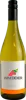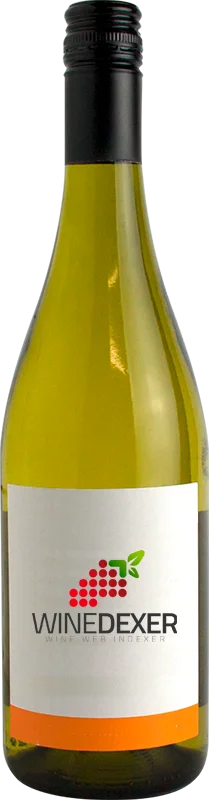
Winery Ernst TriebaumerRust Gelber Muskateller Ried Greiner
 White wine



This wine generally goes well with
Details and technical informations about Winery Ernst Triebaumer's Rust Gelber Muskateller Ried Greiner.
Discover the grape variety: Pirobella
Interspecific crossing, obtained in South Africa in the 1960s by E.P. Evans, between the 15 Pirovano (madeleine angevine X bellino) and the isabelle. It should be noted that from this cross was also born the black muska.
Last vintages of this wine
The best vintages of Rust Gelber Muskateller Ried Greiner from Winery Ernst Triebaumer are 0
Informations about the Winery Ernst Triebaumer
The Winery Ernst Triebaumer is one of of the world's great estates. It offers 26 wines for sale in the of Burgenland to come and discover on site or to buy online.

The wine region of Burgenland
Burgenland is a large wine-producing region on the eastern border of Austria. Despite the country's image as the producer of some of the world's finest white wines, Austria is also home to a thriving red wine culture: Burgenland, with its sunny, continental summers, is the country's key red wine region, with its wines based mainly on the Blaufränkisch and Zweigelt grape varieties. Sweet, botrytized wines are also a specialty of the region, particularly in the Terroir surrounding the Neusiedlersee lake. The region occupies a narrow strip of land that runs from the Danube River down to Steiermark in the South.
The wine region of Weinland
Weinviertel DAC – whose name translates as "wine quarter" – is an appellation in Niederösterreich (Lower Austria). It is by far the largest Districtus Austriae Controllatus wine region in Austria. It was also the first Austrian wine region to be given that title, in 2002, with a DAC Reserve designation added in 2009. The designation applies only to white wines from the Grüner Veltliner Grape variety.
The word of the wine: White winemaking
White wines are obtained by fermentation of the juice after pressing. A pre-fermentation maceration is sometimes practiced to extract the aromatic substances from the skins. White wines are normally made from white grapes, but can also be made from red grapes (blanc de noirs). The grapes are then pressed as soon as they arrive at the vat house without maceration in order to prevent the colouring matter contained in the skins from "staining" the wine.