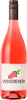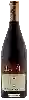
Winery Emrich MontignyBlauer Spätburgunder S
 Red wine


In the mouth this red wine is a with a nice freshness.
This wine generally goes well with poultry, beef or veal.
Taste structure of the Blauer Spätburgunder S from the Winery Emrich Montigny
Light | Bold | |
Smooth | Tannic | |
Dry | Sweet | |
Soft | Acidic |
In the mouth the Blauer Spätburgunder S of Winery Emrich Montigny in the region of Nahe is a with a nice freshness.
Food and wine pairings with Blauer Spätburgunder S
Pairings that work perfectly with Blauer Spätburgunder S



Original food and wine pairings with Blauer Spätburgunder S

The Blauer Spätburgunder S of Winery Emrich Montigny matches generally quite well with dishes of beef, veal or game (deer, venison) such as recipes of fast and, veal tagine with artichokes and lemons or rabbit à la lorientaise.
Details and technical informations about Winery Emrich Montigny's Blauer Spätburgunder S.
Discover the grape variety: Refosco ped. rosso
Refosco dal peduncolo rosso is a very old grape variety, certainly finding its first origins in the region of Friuli situated in the north-eastern point of Italy. It should not be confused with terrano or refosco d'Istria, ... the one described here is more qualitative. It can be found in the former Yugoslavia, in Argentina, ... in France it is almost unknown. According to genetic analysis, it is the son of the marzemino, the grandson of the teroldego, the father of the corvina and the grandfather of the rondinella (Pierre Galet).
Last vintages of this wine
The best vintages of Blauer Spätburgunder S from Winery Emrich Montigny are 0
Informations about the Winery Emrich Montigny
The Winery Emrich Montigny is one of of the world's greatest estates. It offers 19 wines for sale in the of Nahe to come and discover on site or to buy online.

The wine region of Nahe
Nahe is one of the smaller German wine regions, named after the Nahe river which joins the Rhein at Rheinhessen/bingen">Bingen. The viticultural carea here is characterised by dramatic topography with steep slopes and craggy outcrops of metamorphic rock. Like most of the regions on or near the Rhine, its most prestigious wines are made from Riesling. There are around 4,000 hectares (10,000 acres) of Vineyards, spread across seven Grosslagen (wine districts) and over 300 Einzellagen (individual vineyard sites).
The word of the wine: Tense
Said of a lively and nervous wine.