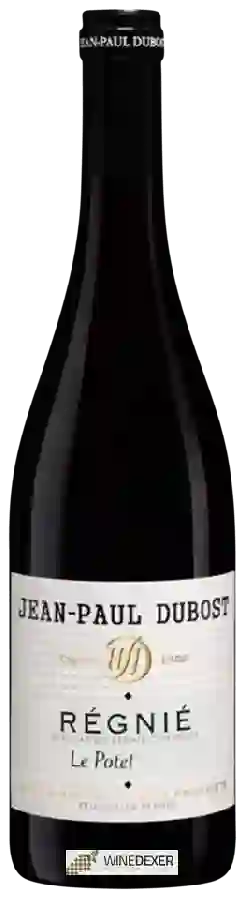
Winery DubostPotet Régnié
 Red wine


In the mouth this red wine is a with a nice freshness.
This wine generally goes well with pork, poultry or veal.

Taste structure of the Potet Régnié from the Winery Dubost
Light | Bold | |
Smooth | Tannic | |
Dry | Sweet | |
Soft | Acidic |
In the mouth the Potet Régnié of Winery Dubost in the region of Beaujolais is a with a nice freshness.
Food and wine pairings with Potet Régnié
Pairings that work perfectly with Potet Régnié



Original food and wine pairings with Potet Régnié

The Potet Régnié of Winery Dubost matches generally quite well with dishes of pasta, veal or pork such as recipes of succulent and easy to make beef lasagna, stuffed cutlets or home-made white pudding.
Details and technical informations about Winery Dubost's Potet Régnié.
Discover the grape variety: Chancellor
Coloured and fruity reds with a dense ruby robe, supple tannins and fresh acidity, with aromas of red and black fruits (cherry, blackberry, plum), soft spices and slightly herbaceous notes. Round mouthfeel, best drunk young. A highly frost- and disease-resistant hybrid, the driving force of northern vineyards: north-eastern USA (Finger Lakes, Pennsylvania) and Canada (Ontario). A French hybrid created around 1920 by Albert Seibel (Seibel 7053).
Informations about the Winery Dubost
The Winery Dubost is one of of the world's great estates. It offers 43 wines for sale in the of Régnié to come and discover on site or to buy online.

The wine region of Régnié
Youngest of the ten Beaujolais crus (AOC 1988), ~400 ha on the commune of Régnié-Durette, pink granitic sandy-pebbly arenas. Single Gamay vinified by semi-carbonic maceration. Signature fruity, silky reds with notes of redcurrant, raspberry, red cherry, wild strawberry, violet, peony and spice, fine tannins and airy palate — floral finesse, one of the most accessible crus. Drink young and fresh with poultry or charcuterie.
The wine region of Beaujolais
Kingdom of Gamay (98% of the vineyard): fruity, accessible reds with signature notes of cherry, raspberry, banana (carbonic maceration), violet and sweet spices, supple tannins and juicy acidity. From festive Beaujolais Nouveau (3rd Thursday of November) to the 10 more structured, age-worthy Crus: deep earthy Morgon, sturdy Moulin-à-Vent, floral Fleurie, crunchy Brouilly. Some lively Chardonnay. 12,000 ha south of Burgundy, granitic soils.
The word of the wine: Decanting
Decanting, an operation performed by a sommelier with a decanter to separate the clear wine from the solid parts in a bottle.