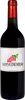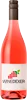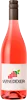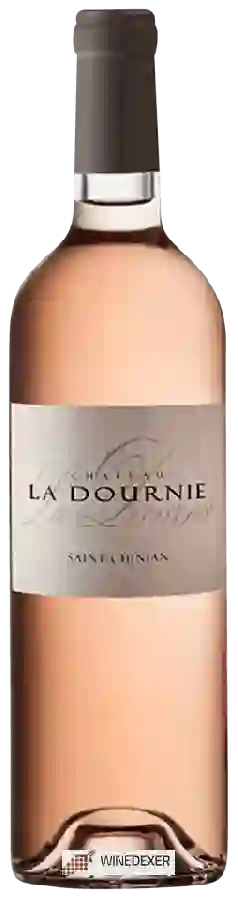
Château la DournieSaint-Chinian Rosé
 Pink wine
In the mouth this pink wine is a powerful with a nice freshness.
This wine generally goes well with vegetarian, appetizers and snacks or lean fish.

Taste structure of the Saint-Chinian Rosé from the Château la Dournie
Light | Bold | |
Dry | Sweet | |
Soft | Acidic |
In the mouth the Saint-Chinian Rosé of Château la Dournie in the region of Languedoc-Roussillon is a powerful with a nice freshness.
Food and wine pairings with Saint-Chinian Rosé
Pairings that work perfectly with Saint-Chinian Rosé



Original food and wine pairings with Saint-Chinian Rosé


The Saint-Chinian Rosé of Château la Dournie matches generally quite well with dishes of pasta, vegetarian or appetizers and snacks such as recipes of pasta with auvergne blue cheese, zucchini quiche or rillettes of sardines.
Details and technical informations about Château la Dournie's Saint-Chinian Rosé.
Discover the grape variety: Prugnolo Gentile
Structured and elegant reds with a deep ruby robe, firm yet melted tannins and a dense palate with fine acidity, showing signature aromas of red fruits (morello cherry, raspberry), plum ("prugnolo" = small plum), violet, spices, tobacco and Tuscan balsamic notes. Fine ageing potential. Star of Vino Nobile di Montepulciano DOCG, one of the great Tuscan reds for ageing. Tuscan synonym for Sangiovese grown in Montepulciano.
Informations about the Château la Dournie
The Château la Dournie is one of of the world's greatest estates. It offers 13 wines for sale in the of Saint-Chinian to come and discover on site or to buy online.

The wine region of Saint-Chinian
Languedoc cru between Beziers and Saint-Pons, signature dual terroir. Fleshy Mediterranean reds with notes of black fruit (blackberry, black cherry), garrigue, pepper, liquorice and spice, firm tannins and a sun-drenched palate. Northern schists: fruitier, smokier profile. Southern clay-limestone: more structured wines.
The wine region of Languedoc-Roussillon
Largest single French vineyard, dominated by sunny, generous reds. Spicy Syrah, candied Grenache (ripe fruit, garrigue), structured Carignan, deep Mourvèdre, supple Cinsault. Stars: structured Corbières, Minervois, Faugères, Saint-Chinian; round Côtes-du-Roussillon. Legendary vins doux naturels: Banyuls and Maury (fortified Grenache) with notes of cocoa, fig, prune.
The word of the wine: Castle
A term often used to designate wineries, even if they do not have a real castle.